Defending Rahul Gandhi: The Truth Behind Savarkar's Mercy Petitions
Listen to Article
Prabhat VoiceListen to natural Indian English narration
About the Author: Aziz Umar is Co-Founder of FairLex and Researcher for Project Mishkat
Recently, a defamation suit was filed in a Pune court against Rahul Gandhi over his remarks concerning Vinayak Damodar Savarkar. The core of the controversy arises from Gandhi’s public statements highlighting that Savarkar wrote multiple clemency and mercy petitions to the British colonial rulers to secure his release from prison. Predictably, these remarks have sparked a heated political debate. However, when a matter of history is pushed into a courtroom, it is essential to separate political emotion from documented facts. That too is the objective of the present opinion piece.

If we look neutrally at the official archives, government records, and the thorough research conducted by historians such as Shamsul Islam, it becomes clear that Rahul Gandhi’s statements are not baseless accusations, but are firmly rooted in historical evidence. Defending these claims requires nothing more than reading the actual letters and documents from the British era.
To understand the situation, we must first look at the defense often presented by Savarkar’s supporters. When confronted with the reality of these mercy petitions, his defenders, including various Rashtriya Swayamsevak Sangh (RSS) publications, argue that the petitions were merely a strategic "ruse". They claim Savarkar was a master strategist who felt he was wasting his prime years in jail. According to this narrative, he wrote these letters just to trick the British into releasing him so he could rejoin the active freedom struggle, and they frequently draw a parallel between this tactic and the strategies used by Shivaji to outsmart the Mughal rulers.
However, historical records and researchers paint a very different and even contradictory picture. In his extensively researched book, Savarkar, Unmasked, Shamsul Islam notes that comparing Savarkar’s mercy petitions to Shivaji’s heroic strategies is a dishonest comparison and a clear insult to Shivaji. The original texts of Savarkar’s petitions reveal a tone of absolute surrender, rather than a clever tactical deception.

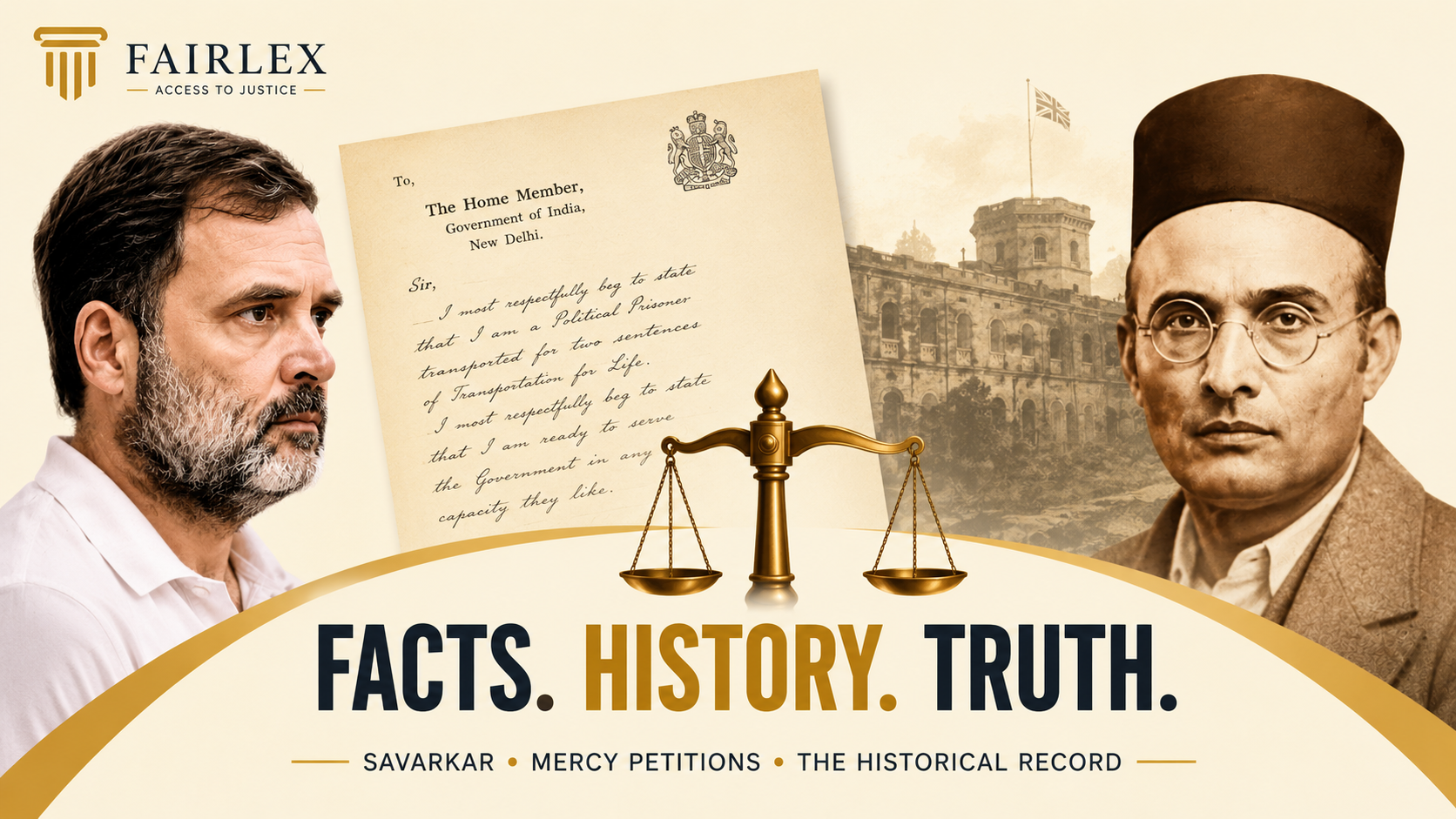
According to the records, Savarkar submitted several mercy petitions to the British government. In fact, between 1911 and 1920, he wrote at least five or more petitions, specifically in the years 1911, 1913, 1914, 1918, and 1920. One of the most revealing documents is his 1913 petition, written and presented personally to Sir Reginald Craddock, the Home Member of the Governor General's Council, when Craddock visited the Cellular Jail in the Andaman Islands.
In this petition, Savarkar detailed the hardships of his imprisonment. He described being subjected to solitary confinement for six months and being forced to work on the oil mill, which was considered the hardest labor in the jail. He complained that despite his exceptionally good behavior, he was not given the same promotions, better food, or special treatment that other convicts received. He pleaded with the British officials to end his situation, either by transferring him to an Indian jail where he could earn remissions and receive family visits, or by treating him like a standard convict rather than a special political prisoner.

What stands out most in these official archives is the language of total submission. Far from plotting a secret return to the revolutionary underground, Savarkar offered to work for the colonial government. In his own words, he wrote, "I am ready to serve the government in any capacity they like". He went on to describe the British government as a parental figure, writing, "The mighty alone can afford to be merciful, and therefore, where else can the prodigal son return, but to be parental, those of the government".
Some might argue that writing a petition was simply a standard legal right available to any prisoner at the time. This is true. When Sir Reginald Craddock visited the jail, other revolutionaries like Barindra Kumar Ghosh and Hrishikesh Kanjilal also submitted petitions. However, there was a stark difference in the content. While other revolutionaries demanded humane treatment and basic rights for all political prisoners as a whole, they showed no remorse for their revolutionary past and did not beg for personal favors. In contrast, the surrender offered by Savarkar was described as "total and exhaustive".
Furthermore, the idea that this was a fake surrender to fool the British is contradicted by prominent historians. R.C. Majumdar, a highly respected historian often praised by various political camps, deeply studied the British archives regarding the Cellular Jail. Majumdar concluded that the harsh conditions of the jail had genuinely produced a "radical change" in Savarkar's attitude toward the British government. The historian noted that Savarkar had actually changed his views and was willing to abandon the path of secret conspiracies and revolutionary violence in favor of peaceful methods.

If Savarkar had surrendered so completely, why wasn't he released immediately in 1913? The British official, Craddock, noted that while Savarkar himself had given up, his followers in India and America were still active and dangerous. The British decided to keep him imprisoned longer to demoralize the remaining revolutionaries. Eventually, however, Savarkar was released. Out of a 50-year sentence, he served less than 10 years in the Cellular Jail before being moved to the mainland and eventually released in 1924, successfully securing a massive sentence remission of over 35 years. Dhananjay Keer, Savarkar’s official biographer, confirms that Savarkar willingly accepted the conditions set by the British for his release. Historical analysis even suggests the British eventually found it useful to release him in the 1920s to help break the growing Hindu-Muslim unity of that era.
In contrast to Savarkar's petitions for mercy, hundreds of other freedom fighters remained in the Cellular Jail to serve their full, brutal sentences. Thousands of martyrs, including the revolutionaries of the Gadar movement and icons like Bhagat Singh, refused to bow down or beg for their lives, choosing instead to face execution or lifelong imprisonment with their heads held high.

In conclusion, the defamation case against Rahul Gandhi appears to ignore the weight of documented history. Gandhi’s remarks stating that Savarkar wrote mercy letters to the British are not a fabrication; they are a matter of public record. From the 1913 petition to Sir Reginald Craddock to the historical analysis of R.C. Majumdar and Shamsul Islam, the official archives validate the claim that Savarkar sought clemency through total submission to the colonial rulers. Discussing these verified historical documents in the public domain is an exercise in historical truth, not defamation.
Start the Conversation
Share your perspective on this article