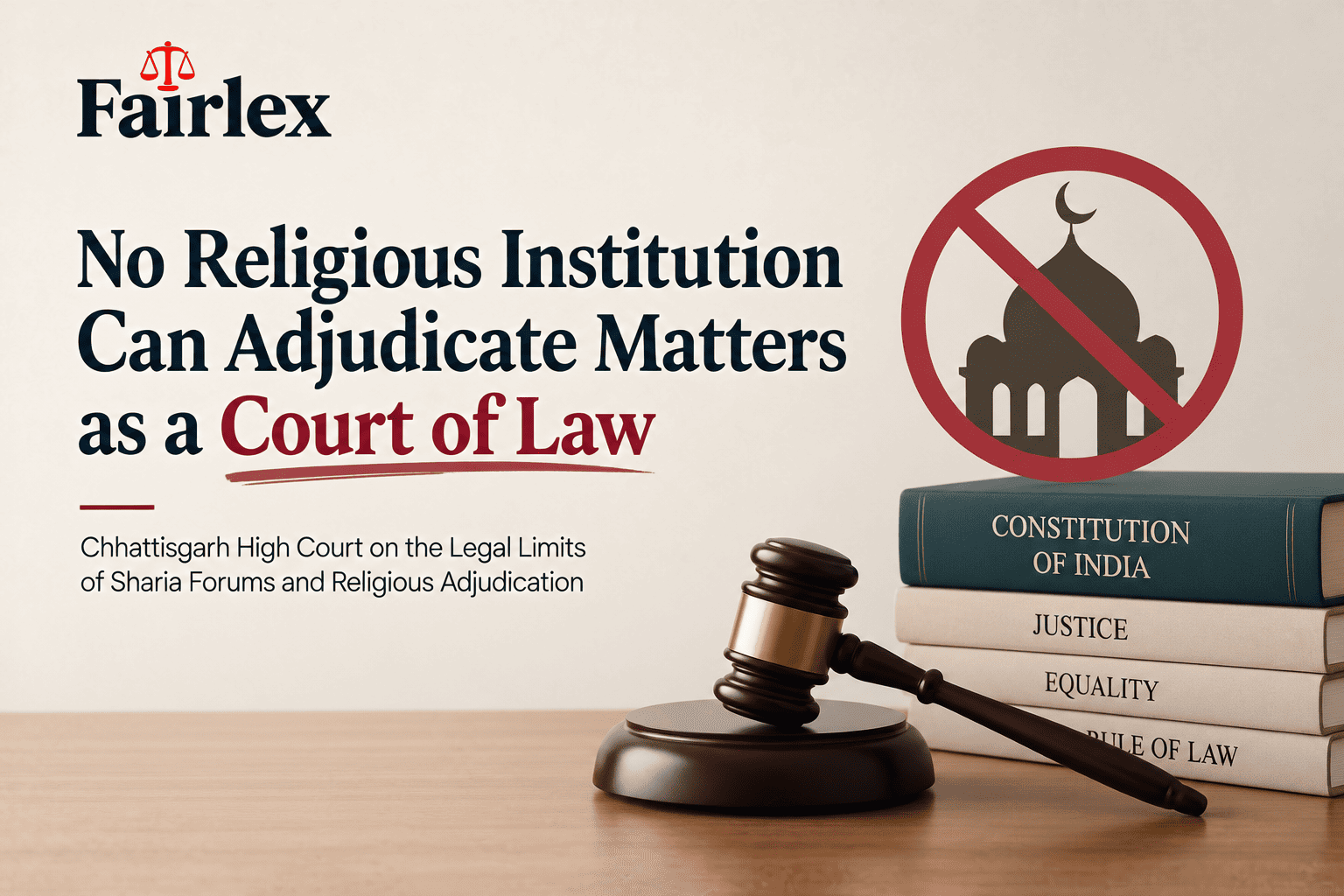
Delhi High Court Refuses Urgent Hearing Against Cockroach Janta Party Protest
Listen to Article
Prabhat VoiceListen to natural Indian English narration
AUTHOR: Amaan Ahmed is Founding member of the FairLex, and serving as the Design head for the platform.
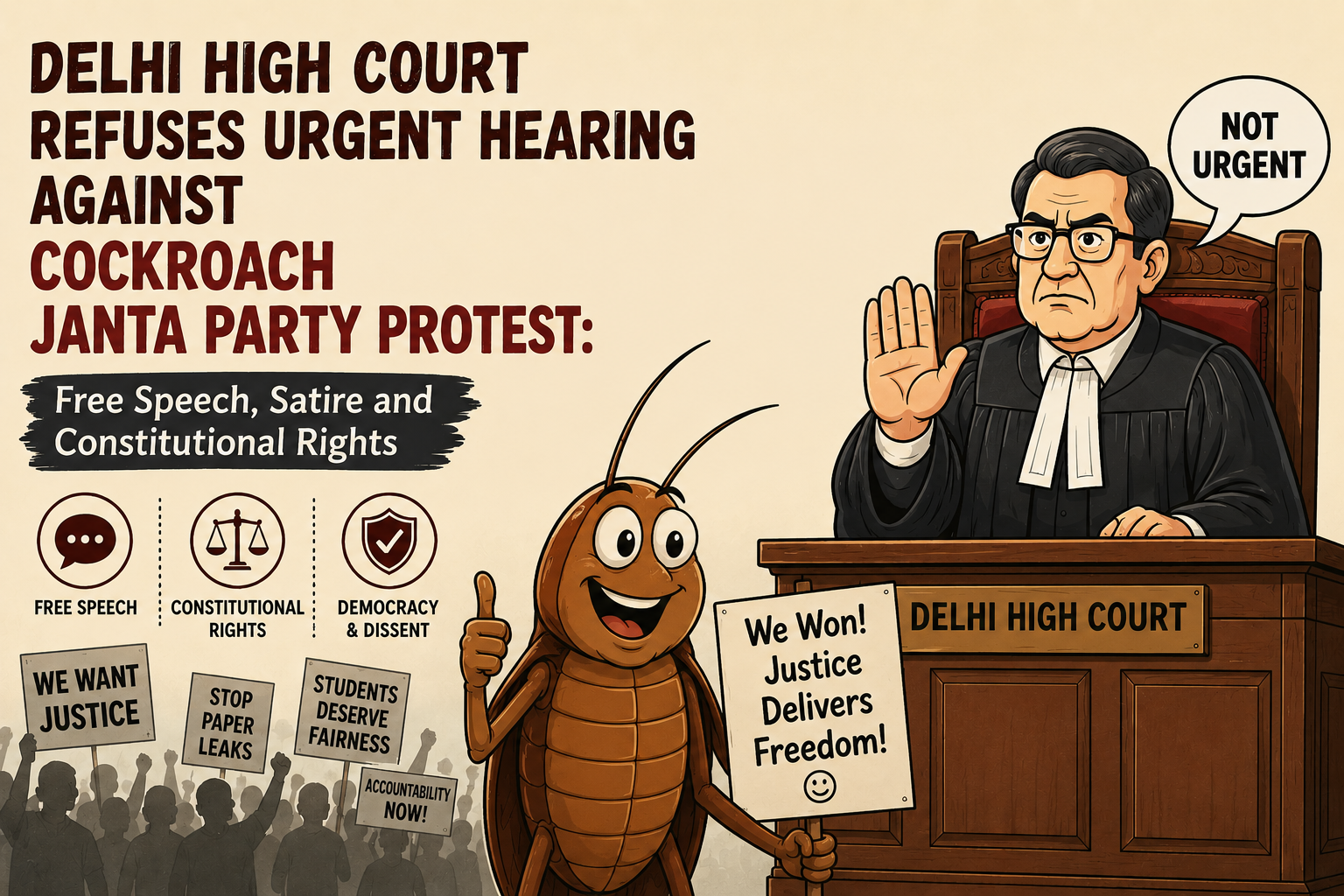
What if a tiny cockroach became the symbol of a big protest? That unusual idea has sparked curiosity across India. The "Cockroach Janta Party" (CJP), which started as a humorous and satirical movement online, has now landed in the middle of a legal controversy over a planned demonstration at Delhi's Jantar Mantar.
On June 5, the Delhi High Court declined to grant an urgent hearing on a petition that sought restrictions on a protest planned by the CJP at Jantar Mantar. While the Court's decision was brief, the issue raises important questions about free speech, public protests, and the role of courts in a democracy.

What Is the Cockroach Janta Party?
The Cockroach Janta Party is not a traditional political party. It is a satirical movement that uses humor and political commentary to highlight issues such as unemployment, educational failures, institutional accountability, and freedom of expression.
The movement gained attention after comments made during a Supreme Court hearing in May. Certain remarks about unemployed youth quickly went viral on social media and sparked widespread debate. Soon, internet users began embracing the term "cockroach" as a symbol of protest and criticism. The group announced a public gathering at Delhi's Jantar Mantar on June 6 to protest issues affecting students, particularly controversies surrounding examination systems.
Why Was the Protest Being Held?
The protest was mainly focused on concerns regarding examination irregularities and paper leak allegations that have affected students across the country.
Many students and parents have expressed frustration over repeated controversies involving competitive examinations. The organizers claimed that young people deserve a fair and transparent examination system and wanted to use the protest as a platform to voice those concerns. The movement also called for accountability from authorities responsible for managing educational institutions and examinations.
The PIL Against the Protest
Before the protest could take place, an NGO named Save India Foundation approached the Delhi High Court through a Public Interest Litigation (PIL).
The NGO argued that the gathering could create law-and-order problems and disturb public peace. According to the petition, certain messages circulating online in connection with the movement contained aggressive language and could encourage unrest. The petitioner requested the Court to direct authorities to take preventive measures. It also sought crowd-control arrangements and even suggested that the gathering be shifted to another location.
What Did the Delhi High Court Do?
The matter was mentioned before a vacation bench of the Delhi High Court comprising Justices Saurabh Banerjee and Amit Sharma. However, the Court refused to grant an urgent hearing.
This does not mean the Court supported the protest or agreed with the organizers. It simply means that the judges were not convinced that the situation required immediate judicial intervention. The Court chose not to treat the matter as an emergency.
Why Is This Decision Important?
The decision is significant because it touches upon one of the most important principles in a democracy: the right to peacefully protest. The Indian Constitution guarantees citizens the freedom of speech and expression as well as the right to assemble peacefully. These rights are not unlimited, but they cannot be restricted merely because someone fears that a protest might cause trouble.
Courts generally require solid evidence before restricting constitutional freedoms. Mere assumptions or predictions are usually not enough. If authorities were allowed to stop every protest simply because there was a possibility of disturbance, many legitimate demonstrations could never take place. That is why courts often act cautiously in such situations.
Conclusion
The Delhi High Court's refusal to grant an urgent hearing is not a victory for one side or a defeat for the other. Instead, it highlights an important constitutional principle: restrictions on speech and peaceful assembly should not be imposed without strong reasons.
The Cockroach Janta Party may have started as an internet joke, but it has now become part of a much larger conversation about youth frustration, educational accountability, political satire, and democratic freedoms.
Written by
Team Fairlex
Contributor and legal researcher at FairLex, analyzing contemporary Indian jurisprudence, landmark judicial decisions, and legislative policy.
Continue Reading
Related Stories

Start the Conversation
Share your perspective on this article