Exclusive jurisdiction clause can indicate seat of arbitration: Supreme Court
Listen to Article
Prabhat VoiceListen to natural Indian English narration
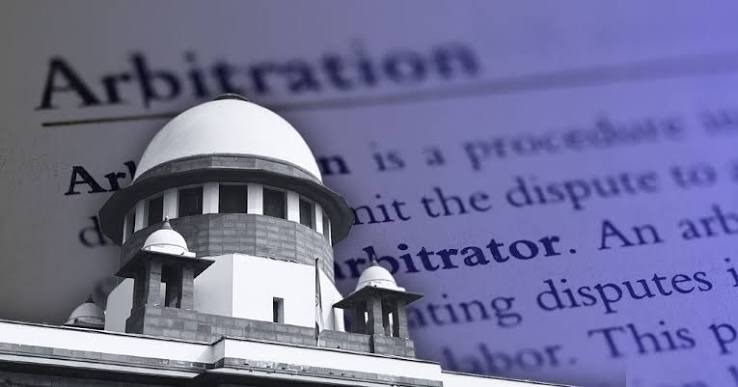
The recent dismissal of a Special Leave Petition by the Supreme Court of India in the matter of Sliksync Technologies (P) Ltd. v. Pidge Technologies (P) Ltd. represents a significant milestone in the evolving landscape of Indian arbitration law, specifically regarding the determination of the "seat" of arbitration. This decision, delivered by a Division Bench comprising Justice J.B. Pardiwala and Justice K. Vinod Chandran, reinforces a critical judicial trend: the use of "exclusive jurisdiction" clauses to fill the void when a contract fails to explicitly name a seat for dispute resolution. By upholding the Delhi High Court's authority to appoint a sole arbitrator, the Supreme Court has provided much-needed clarity on how courts should interpret the intentions of parties when their contractual drafting is incomplete, but their choice of forum is clear.

HOW THE PRESENT DISPUTE TRIGGERED:
The legal complexities of this case began with a commercial friction between two technology-driven entities. Pidge Technologies (P) Ltd., acting as a logistics platform operator, had entered into a Merchant Services Agreement on September 18, 2024, with Sliksync Technologies (P) Ltd.. Under this agreement, Sliksync was tasked with the critical responsibility of providing manpower through delivery riders, which included the management of sensitive data such as rider profiles and cash-on-delivery payment details. The operational success of Pidge’s logistics network was contingent upon the accuracy of this data, which facilitated both daily operations and the timely payment of personnel.
However, the relationship deteriorated when Pidge alleged that Sliksync had fundamentally breached its contractual obligations. According to the sources, the provision of incorrect data sets and inaccurate rider information by Sliksync triggered a cascade of operational failures, most notably resulting in significant delays in salary payments. This administrative breakdown eventually led to a strike by the delivery riders, creating a substantial disruption to Pidge’s business model. Despite these challenges, Pidge continued its service operations, leading to a claim of outstanding dues amounting to ₹2,09,81,622 for the final quarter of 2025. When Pidge issued a formal demand for payment in December 2025, Sliksync responded not with a settlement, but with a robust defense alleging its own operational losses and "Gross Merchandise Value" (GMV) deficits, which Pidge subsequently denied.

The dispute escalated further when Pidge invoked the arbitration clause (Clause 8) of their agreement in January 2026. Sliksync’s response in March 2026 raised the stakes significantly, as they presented counterclaims totaling ₹4,58,00,000. These counterclaims were split between alleged losses of ₹4.5 crore attributed to Pidge’s actions and an additional ₹8 lakh related to collected delivery payments. With the parties at a multi-crore impasse, Pidge approached the Delhi High Court under Section 11(5) and Section 11(6) of the Arbitration and Conciliation Act, 1996, seeking the judicial appointment of an arbitrator.
The core analytical tension before the High Court—and later the Supreme Court—centered on a common but troublesome drafting oversight: the agreement provided for arbitration but neglected to name a specific "seat" or "venue". Instead, the parties had included a clause stating that the courts at New Delhi would have exclusive jurisdiction over disputes arising from the agreement. This lack of explicit "seat" terminology often leads to protracted litigation over which court has the power to supervise the arbitration, a phenomenon sometimes described as the "Seat versus Venue" dilemma that has long distressed domestic arbitrations.
REASONING OF DELHI HIGH COURT:
In resolving this jurisdictional puzzle, the High Court performed a contextual analysis of Clause 8. The court reasoned that since the parties had explicitly agreed to resolve their disputes via arbitration and simultaneously agreed that New Delhi courts held exclusive jurisdiction, the two provisions must be read in harmony. The High Court determined that in the absence of a named seat, an exclusive jurisdiction clause serves as a definitive indicator of the parties’ intent regarding the seat of arbitration.
A pivotal element in this judicial reasoning was the reliance on the 2025 Supreme Court precedent, Activitas Management Advisor (P) Ltd. v. Mind Plus Healthcare (P) Ltd.. This recent authority established a clear rule of construction: when an exclusive jurisdiction clause is provided within the context of an arbitration agreement, it must be construed as indicating the "seat". The Delhi High Court found that the facts of the Pidge-Sliksync dispute were "squarely covered" by this precedent, thereby affirming its own jurisdiction to entertain the petition and appoint an arbitrator.
APPOINTMENT OF SOLE ARBITRATOR:
Consequently, the High Court appointed Varuna Bhandari Gugnani as the Sole Arbitrator to adjudicate the substantial claims and counterclaims. Furthermore, the court ensured a structured legal framework by directing that the proceedings be conducted under the Delhi International Arbitration Centre (DIAC) and its established rules. To maintain the integrity of the process, the arbitrator was mandated to file the necessary disclosure regarding independence and impartiality under Section 12(2) of the Act.

Sliksync Technologies challenged this interpretation through a Special Leave Petition (SLP) to the Supreme Court, essentially arguing against the High Court’s jurisdictional reach. However, the Supreme Court’s Division Bench, after reviewing the records and hearing the arguments, found "no good ground" to interfere with the High Court’s decision. By dismissing the SLP on July 27, 2026, the Supreme Court effectively solidified the legal principle that "exclusive jurisdiction" acts as a proxy for the "seat" in the context of arbitration.
THE DECISION OF THE SUPREME COURT:
From an analytical perspective, this judgment is significant for several reasons. First, it prioritizes contractual intent over literal terminology. By interpreting an exclusive jurisdiction clause as a designation of the seat, the court prevents parties from escaping their arbitration obligations through technical drafting omissions. Second, it promotes legal certainty and efficiency. In the fast-paced world of logistics and technology services, as seen in the Pidge-Sliksync dispute, prolonged battles over where to litigate only serve to delay the resolution of the actual financial dispute. This ruling ensures that if you pick a city's courts for jurisdiction, you have effectively picked that city as your arbitration seat.
Furthermore, the decision underscores the importance of institutional arbitration. By directing the case to the DIAC, the court moves away from ad hoc arrangements toward a more regulated environment, which is increasingly favored in the Indian legal system to ensure timely and professional dispute resolution.
In conclusion, the Supreme Court’s dismissal of Sliksync’s petition is a clear signal to the business community and legal practitioners. It emphasizes that while precise drafting remains ideal, the courts will look at the broader jurisdictional framework agreed upon by parties to ensure that arbitration remains a viable and efficient alternative to traditional litigation. For Pidge and Sliksync, the path is now clear for their multi-crore dispute to be settled on its merits in New Delhi, the city they effectively chose as their legal home
The True of Judgment Sliksync Technologies (P) Ltd. v. Pidge Technologies (P) Ltd. will be uploaded soon.
Start the Conversation
Share your perspective on this article