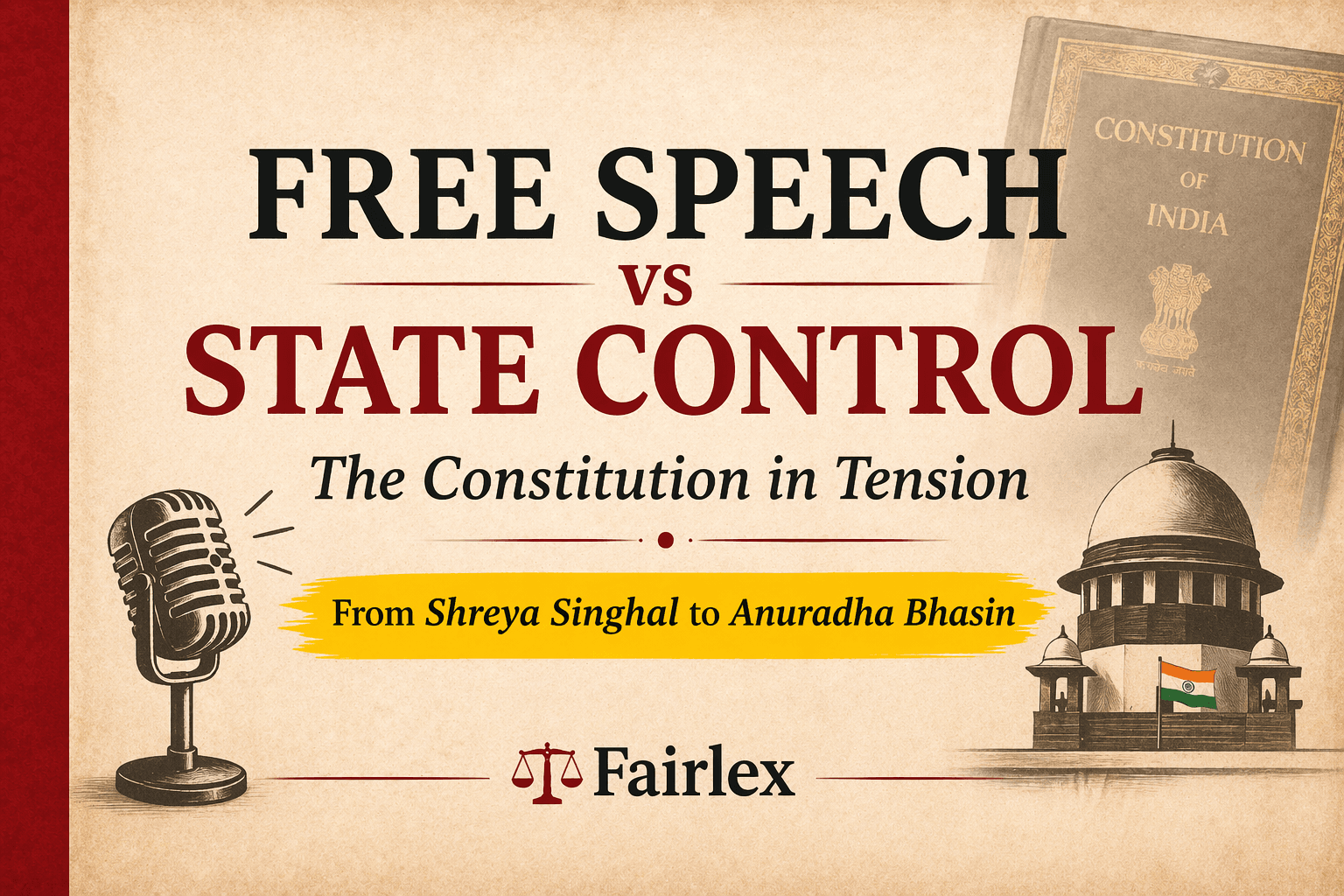
Injustice in the Name of Justice: The Constitutional Crisis of Bulldozer Governance
Listen to Article
Prabhat VoiceListen to natural Indian English narration
Introduction
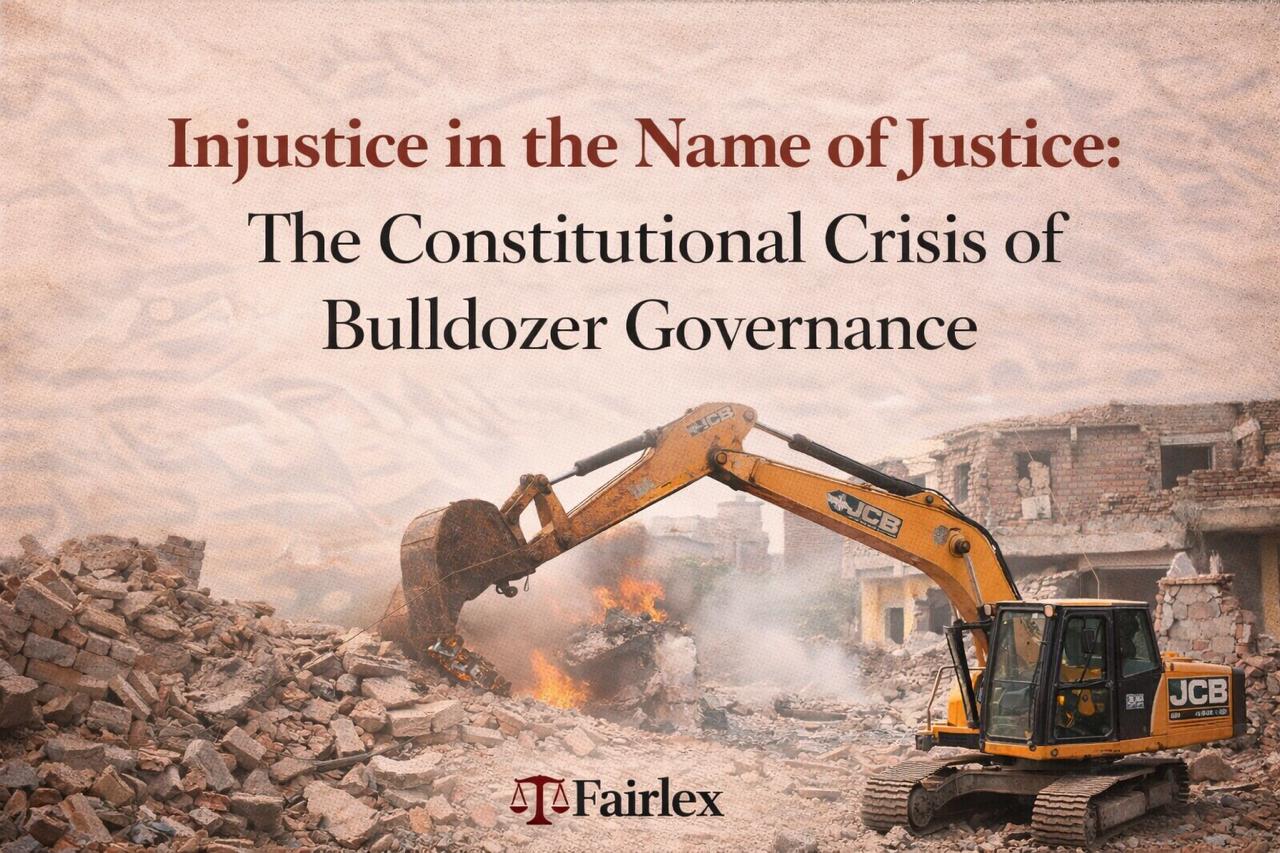
In recent years, India's pluralistic democratic landscape has been confronted and still grappling with a distressing, alarming, and rapid expansion of ‘’Bulldozer Justice’’. Bulldozer Justice or Bulldozer Governance has emerged as a new type of state practice to punish accused, rioters, political dissenters, and mafias, which manifests in the demolition and complete destruction of their homes and properties. It is often observed that these actions were carried out without compliance with specific state laws, and the fundamental legal procedures.
Data shows such practices disproportionately used against Muslims on a large scale, between 2019 and 2025, 1377 casesof demolitions were documented in 53 incidents of extra judicial and punitive demolitions across UP, MP, Haryana and Delhi. Paradoxically these actions were executed in the name of "Instant justice", yet beneath this rhetoric of administrative efficiency lies a deeper constitutional concern: when the executive begins to penalize with punitive punishment before judicial adjudication. Does this remain justified within a rule-of-law framework?
However, these devastating acts are unthinkable in the largest democracy where "actions of state are governed by the rule of law" and ‘’every action of the executive government must be informed with reason and should be free from arbitrariness.’’ This move towards ‘’Administrative Punishment’’ in the name of “instant justice” has precipitated a profound constitutional crisis, challenging the foundational democratic principles and due process of law. The Indian constitution considers equality before law, prohibition of discrimination based on religion and ethnicity, due process of law, and separation of powers as its core guarantees and fundamental principles. These values ensure that punishment must be preceded by legal determination, not administrative discretion or public pressure.
This blog examines the phenomenon of bulldozer governance as a threat to constitutional governance, observing its justificatory narratives and patterns of collective retribution, and ultimately assessing its implications for the rule of law and democratic accountability.
‘’Bulldozer Justice’’ and its troubling rise
Prior to 2017, the term “Bulldozer Justice’’ did not enter common usage, but subsequently it acquired prominence following the CM Adityanath’s statement in September 2017, shortly after taking office, where he asserted that “my government will bulldoze houses of anyone even thinking of perpetuating crime …”. it is noted that while Section 4 of Bharatiya Nyaya Sanhita (BNS), 2023 includes the forfeiture of property (confiscation of assets acquired through illegal means) as a punishment, it does not allow for the physical demolition of residential or commercial structures.
Since then, the bulldozer, an industrial apparatus, became a tool of state action and acquired contemporary political discourse. The state of Uttar Pradesh became the earliest laboratory for this systematic model of extrajudicial punitive demolition. Directed at alleged offenders, participants in unrest, protesters, political opponents and activists. On a large scale the bulldozer was deployed in high profile cases against Vikas Dube alongside political strongmen like Mukhtar Ansari, Atiq Ahmad, and activist Javed Ahmed, although beautification and development plans, along with the removal of encroachments and illegal constructions, were the other two most prominent reasons for these actions, they were carried out selectively and affected certain communities. For instance, at least 1,800 families were evicted in Lucknow for the Kukrail Riverfront Project. These included destruction of 1,169 illegal residential buildings and more than 100 commercial properties in Akbar Nagar colony, which is a 50-year-old Muslim-majority locality.
In the course of these developments, chief minister Adityanath named as "Bulldozer Baba", this policy has generated significant political mileage, as it also has received public endorsement from Prime Minister Narendra Modi.
Following its deployment in Uttar Pradesh, it was re-branded as a potent weapon of majoritarian politics targeting Muslim community. Official statistics on the number of homes demolished remain undisclosed, however, according to housing and land rights network, more than 738,000 people have been forcefully evicted, and 153,000 Homes have been destroyed in 2022-23, and a year-long (2024) documentation of state lead evictions by frontline has recorded at least 7,407 houses, rendering approximately 41,085 people Homeless. HLRN data reveal that Muslims constituted 44% of more than 700,000 people evicted over 2022 and 2023: 23% were scheduled tribes, Adivasi and other tribal groups.
Social, Psychological and political implication
These are not just numbers; they reflect the human cost and mark the earned security— the tears that follow the destruction of homes built through sustained effort and aspiration. Those statistics fail to convey the wider impact. Beyond the immediate demolitions and evictions, what is termed “Bulldozer Raj” operates as a mechanism of intimidation, generating uncertainty and apprehension among communities who fear future action against them.
If one seeks to trace comparable instances of such Blatant use of state power to raze the properties in the name of instant justice, clear parallels are difficult to identify in most jurisdictions; Authors like Shivangi Mariam Raj and Somdeep Sen have argued that these weaponized demolitions in India have, at least to some extent, been inspired by the Israeli treatment of Palestinian land, buildings and people. Some critics, like Fahad Zuberi examine this phenomenon through the lens of political socialization; When such demands become embedded in the public’s collective imagination,” Zuberi warns, “even non-BJP States will eventually start responding to them.” It can thus be read within a wider trajectory of social and political otherization, (a part of a larger identity formation that devalues natives as undignified, savage, inhumane or illegitimate.) given observations that its enforcement has often been targeted selectively Muslim community. Amnesty International noted that these demolitions were not just directed at individuals allegedly involved in protests or communal violence but rather at the broader Muslim community. They targeted Muslim businesses, properties, and places of worship.
Constitutional and legal basis for demolition
The Supreme Court in various pronouncements, numerous high court judgments, and India’s international commitments, has all long established the fundamental right to housing in the country. The apex court in the landmark case of Chameli Singh v. State of U.P. (1995) affirmed that the right to shelter is a fundamental right under Article 21 (right to life) and Article 19(1)(e) of the Indian Constitution. Within the international human-rights framework, the right to adequate housing is affirmed in the Universal Declaration of Human Rights of 1948, which India has signed and ratified.
India’s framework governing demolition and eviction derives from foundational constitutional guarantees aimed at protecting property rights and ensuring due process and rule of law;
- Article 14 & 15: Guarantee equality and forbid religious discrimination.
- Article 19: Protects the right to reside and settle.
- Article 21: Ensures that no person is deprived of their property without a fair, lawful process.
In Maneka Gandhi Case (1978), The Supreme Court ruled that the "procedure established by law" under Article 21 must be "just, fair, and reasonable". It also linked Articles 14, 19 and 21, creating a "golden triangle" and transformed the Indian legal system from one of parliamentary supremacy to constitutional supremacy. In the landmark case of Kesavananda Bharati v. State of Kerala, the separation of powers, recognised as part of the Constitution’s basic structure, requires that the determination of guilt remain a judicial function rather than an executive one.
Together, these safeguards require that any demolition or eviction must be undertaken in accordance with due process— prior notice, fair hearing, and availability of appellate or remedial mechanisms. These requirements are embedded in numerous statutory and policy frameworks that regulate such actions across the country.
Rule of law or lawlessness: constitutional principles at stake
Even with these constitutional safeguards, which make clear that the state cannot act and punish arbitrarily individuals by bulldozing houses merely on the basis of allegations of crime, As AP Shah, a retired chief justice of the Delhi High Court also affirmed, “Mere alleged involvement in criminal activity cannot ever be grounds for demolition of property.”
Yet, the Indian state turned into a lawless situation and appeared as if these principles do not exist. even after the recent case of Jamiat Ulama Hind v. North Delhi Municipal Corporation, while staying demolition activities in the country, the apex court reiterated that demolition cannot take place without notice, a hearing, or rehabilitation. The supreme court also proposed to lay down certain guidelines on a pan India basis for dealing with demolition activities. But the next twelve months were characterized by a number of drives across states which showed a different reality on the ground, as reflected in CJP’s and Sabrang India’s reporting, The Polis Project also recorded 15 cases of mosque and mazar demolitions across the country during the first six months of 2025, based on media reports.
These trends illustrate the growing tension between constitutional principles and state practices, and the dangers that targeted state hostility toward specific communities’ poses to the rule of law. In this context, it is apt to recall the words of John Locke: “Wherever law ends, tyranny begins.”
Conclusion
The growing expansion of bulldozer governance, often justified in the name of so-called “instant justice,” has emerged as a significant strain on constitutional principles and human rights. In a constitutional democracy where every institution derives its authority from the Constitution, the erosion of constitutional protections undermines the very foundation of lawful governance. The Constitution requires that punishment follow due process, equality before the law, and judicial scrutiny. When these safeguards are disregarded, the legitimacy of state action itself comes into question. The absence of procedural protections risks normalising punitive governance and weakening public faith in institutional fairness. A constitutional order committed to legality must ensure that justice is delivered through reasoned procedure and institutional accountability, rather than through visible assertions of coercive authority.
Mirza Raihan Baig is a B.A. LL.B. student at the Faculty of Law, Jamia Millia Islamia, and serves as an active PR Associate at FairLex, with interests in constitutional law, legal studies, politics, and international relations.
Written by
Team Fairlex
Contributor and legal researcher at FairLex, analyzing contemporary Indian jurisprudence, landmark judicial decisions, and legislative policy.
Continue Reading
Related Stories


Start the Conversation
Share your perspective on this article