Substance Over Form: Supreme Court in s Bhagheeratha Engineering Ltd. v. State of Kerala
Listen to Article
Prabhat VoiceListen to natural Indian English narration
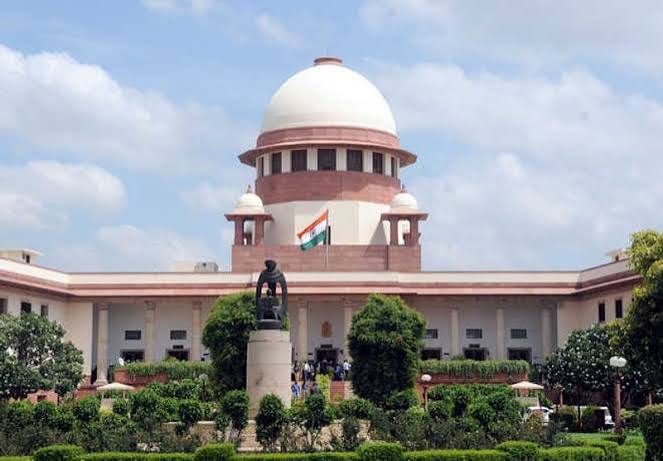
The Supreme Court of India ruled that arbitration tribunals can hear all contract disputes, not just those in the initial notice. The court emphasized that fairness and efficiency should come before technical paperwork. This ensures parties get a complete and just resolution in one go
Introduction
The legal battle in M/s Bhagheeratha Engineering Ltd. v. State of Kerala 2026 INSC 4 represents a landmark moment for the Indian arbitration system. For a long time, there was a confusing debate about how strict a person must be when they first ask to start an arbitration. People often wondered if failing to list every single problem in that first notice meant they could never bring those issues up later. This case provides a clear answer, shifting the focus from rigid paperwork to the actual goal of the law: solving disputes fairly and quickly.
By delivering this judgment, the Supreme Court of India has championed a "pro-arbitration" approach. This means the court prefers making sure people get a fair hearing rather than letting them get stuck on small technical mistakes. The court explained that the main point of a legal notice is simply to start the "clock" for time limits, not to build a wall that keeps out valid claims. This decision is a major win for contractors and businesses working with the government, as it prevents the more powerful party from using minor procedural errors to avoid paying what they owe. It ensures that once an arbitration starts, the experts in charge can look at the whole picture to reach a just result.
Brief facts
The story began with a Road Maintenance Contract awarded to Bhagheeratha Engineering as part of a road development project in Kerala, supported by the World Bank. The contract had a set of steps for solving disagreements: first, the issues went to an Engineer, then to an Adjudicator, and finally to an Arbitrator if someone was still unhappy. The company had four main disagreements regarding payments for materials like bitumen and interest for late payments.
When these issues reached the Adjudicator, the decision was split; the company won on two issues but lost on the other two. The State government was unhappy with one of the issues the company won and decided to take only that specific point to arbitration. The company agreed to start the arbitration but made it very clear that if they were going to court, they wanted all four issues to be reconsidered as "counter-claims".
An expert panel (the Arbitral Tribunal) was set up and eventually decided that the company was right on all four issues, awarding them nearly ₹2 crores. However, the State challenged this in the higher courts. The High Court of Kerala eventually cancelled the award, arguing that because the company didn't send a brand-new official notice for the three extra issues, the experts had no right to decide on them. The company then appealed to the Supreme Court to save its award.
Applicable laws involved and interpretation
The case centered on how to read Sections 21 and 23 of the Arbitration and Conciliation Act, 1996. Section 21 talks about when an arbitration "commences." The Court interpreted this as a procedural step used mainly to check if a claim is too old to be heard (the "limitation" period). The Court found that the law does not say that the initial notice must act as a total boundary for the entire case. Instead, Section 23 is the part of the law that allows a person to fully explain their "claims" once the proceedings have actually started.
Another important rule the Court used is the principle of waiver and conduct. This basically means that if a party acts in a way that suggests they want to settle a whole dispute, they cannot later complain that a specific procedural step was missing. In this case, the State itself had asked the Arbitrator to declare the Adjudicator’s entire decision "null and void". The Court interpreted this as the State’s own attempt to reopen all four issues. Therefore, the State could not later turn around and say the Arbitrator only had power over one issue.
Finally, the Court looked at the arbitration agreement itself. The contract said that "any matter arising out of or connected with" the agreement could be arbitrated. The Court interpreted this wide language to mean that the parties intended for a single panel of experts to solve all their differences at once, rather than having many different legal battles over the same project.
Decision of the Supreme Court of India
The Supreme Court set aside the High Court’s judgment and brought the original award back to life. The Court decided that the High Court was wrong to think that the experts had overstepped their authority. The Court made it clear that the Arbitral Tribunal’s power comes from the original contract, not just the piece of paper used to start the case. Since the contract was written broadly, the experts were allowed to hear all the claims the company brought forward.
The Court also highlighted that the State's own behavior was a key factor. Because the State had challenged the entire earlier decision by the Adjudicator, they had essentially thrown the door open for all four issues to be decided again. The Court noted that requiring a separate notice for every single claim would lead to a "multiplicity of proceedings," meaning parties would be forced to start multiple legal cases for one contract, which is a waste of time and money.
In simple terms, the Supreme Court ruled that as long as a claim is covered by the contract and is brought within the correct time limit, it can be added to the case under Section 23, even if it wasn't in the first notice. The Court upheld the award of nearly ₹2 crores plus interest, ensuring the company was finally paid for its work.
Conclusion
This judgment is a powerful reminder that justice should not be defeated by technicalities. By clarifying the roles of Section 21 and Section 23, the Supreme Court has made the arbitration process more flexible and focused on the truth. It protects the rights of claimants to bring their full story to the table once an arbitration panel is formed, provided the contract allows for it.
The case also sets a high standard for government behavior, making it clear that the State cannot use its own mistakes or inconsistent arguments to block a fair result. For the construction industry and other businesses, this ruling provides peace of mind that a widely worded arbitration clause will be respected and that one single, comprehensive hearing is enough to resolve all their project-related headaches. Ultimately, the decision reinforces the idea that arbitration is a tool for efficiency and finality, not a maze of procedural traps
References:
- M/s Bhagheeratha Engineering Ltd v State of Kerala SC 31 (INSC).
- M/s Karam Chand Thapar & Bros (Coal Sales) Ltd v Tehri Hydro Development Corporation India Ltd Delhi HC, ARB.P. 322/2010.
- Smt Madhubala Jaiswal v Real Estate Appellate Tribunal Allahabad HC, Writ C No 15996/2022.
- ASF Buildtech Private Limited v Shapoorji Pallonji & Company Private Limited 9 SCC 76.
- MK Shah Engineers & Contractors v State of MP 2 SCC 594.
- State of Goa v Praveen Enterprises 12 SCC 581.
- Shin Satellite Public Co Ltd v M/s Jain Studios Ltd AIR 2006 SC 963.
- JG Engineers Private Limited v Union of India (2011) 5 SCC 758.
- AVM Sales Corporation v Anuradha Chemicals Private Limited (2012) 2 SCC
- ABS & Co, ‘Engineer’s failure to give a decision under FIDIC and the contractor’s right to invoke arbitration’ (12 October 2020) https://absco.pk/insights/engineers-failure-to-give-a-decision-under-fidic-and-contractors-right-to-invoke-arbitration/.
- Cohen Smutny A and Polášek P, ‘Unlawful or Bad Faith Conduct as a Bar to Claims in Investment Arbitration’ (Yale Law School).
- Howard Kennedy (Victoria Tyson), ‘The Prevention Principle and Notice Provisions in FIDIC Contracts: A Recap’ (16 December 2025) https://internationalconstructionknowledgehub.com/the-prevention-principle-and-notice-provisions-in-fidic-contracts-a-recap/.
- Singleton Reynolds, ‘C v D: Compliance with Pre-Arbitration Conditions — A Question of Admissibility Rather than Jurisdiction’ (10 October 2023) https://singleton.com/2023/10/c-v-d-compliance-with-pre-arbitration-conditions-a-question-of-admissibility-rather-than-jurisdiction/.
#BhagheerathaEngineering #Section21 #Section23 #ArbitrationAct1996 #SupremeCourtOfIndia #WaiverByConduct #PreventionPrinciple #JurisdictionVsAdmissibility #ProArbitration #SubstantiveJustice
Written by
Team Fairlex
Contributor and legal researcher at FairLex, analyzing contemporary Indian jurisprudence, landmark judicial decisions, and legislative policy.
Continue Reading
Related Stories


Start the Conversation
Share your perspective on this article