US Supreme Court Rules: States Can Limit Girls’ Sports to Biological Females
Listen to Article
Prabhat VoiceListen to natural Indian English narration
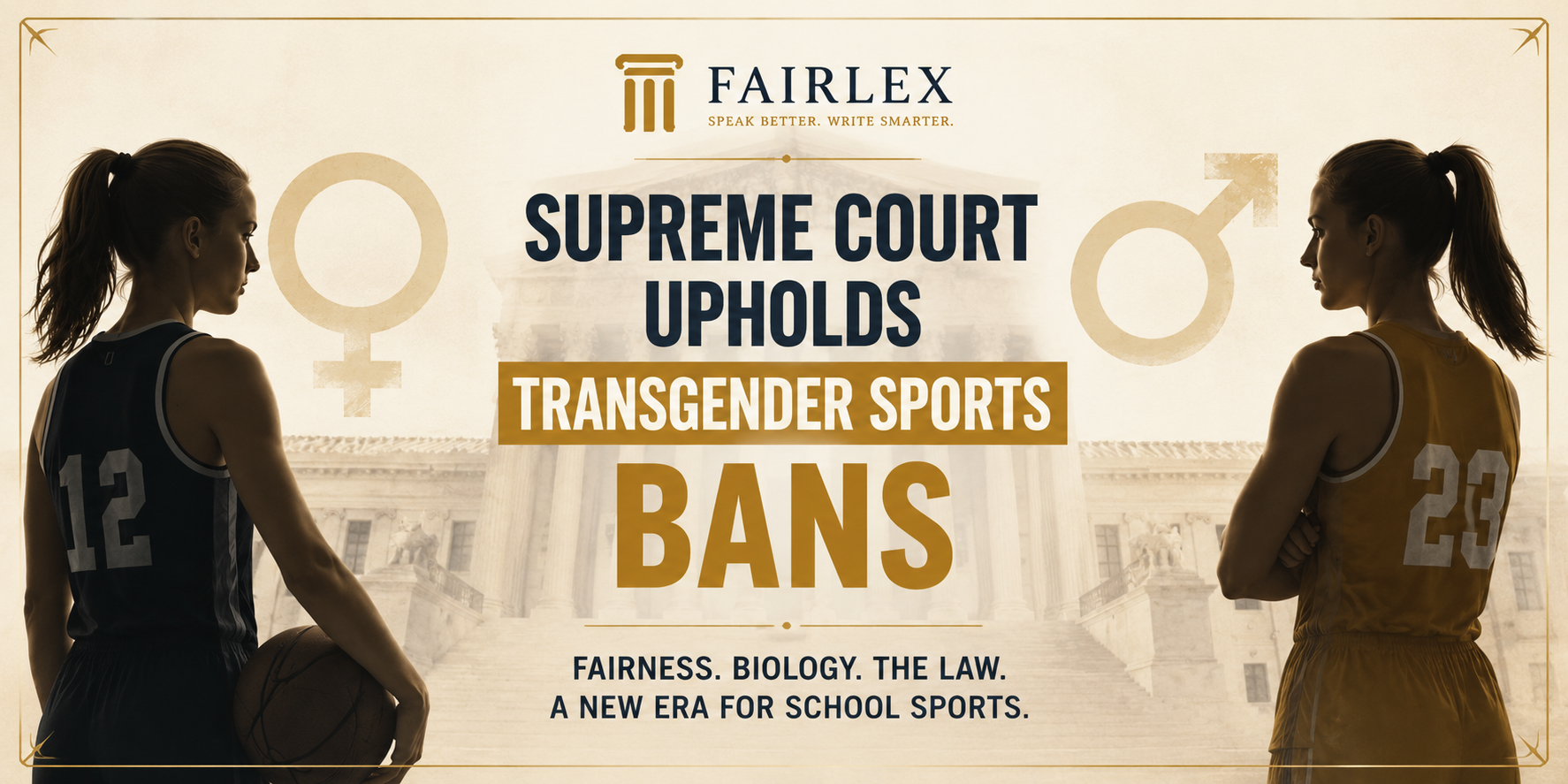
This Tuesday, which will likely be remembered as a turning point in American education and civil rights, the US Supreme Court cleared the way for states to enforce strict bans on transgender student athletes. The decision, which specifically upholds laws in West Virginia and Idaho, signals a major shift in how "fairness" and "equality" are defined in the arena of school sports.

Beyond the legalese of "statutes" and "amendments," the ruling touches the lives of thousands of students across the country. It addresses a fundamental question that has divided locker rooms, school boards, and state houses for years: Who gets to play, and how do we decide?
A Unanimous Consensus on Title IX
At the heart of the legal battle were two primary shields of protection: Title IX, the 1972 law designed to prevent sex discrimination in education, and the 14th Amendment, which promises equal protection for all citizens.
Interestingly, the Court found a rare moment of total agreement on one of these points. In a 9-0 decision, all nine justices—regardless of their personal or political leanings—concluded that the state laws in question do not violate Title IX. These laws specifically define sports teams based on "biological sex" and prohibit "students of the male sex" from participating in female categories. By ruling unanimously on this front, the Court effectively stated that the federal government’s current anti-discrimination laws do not automatically grant transgender girls the right to play on female teams.
The Constitutional Divide
While the Title IX ruling was unified, the interpretation of the U.S. Constitution told a different story. The Court split 6-3 along ideological lines when it came to the 14th Amendment’s Equal Protection Clause.
The six conservative justices, led by Justice Brett Kavanaugh, argued that the state measures are constitutionally sound. Kavanaugh’s written opinion suggests that the Constitution does not require a massive "overhaul" of how American sports are traditionally organized. He noted that states have the legal authority to maintain separate sports categories for biological females to ensure the integrity of the competition.

On the other side, the three liberal justices expressed a procedural concern. They argued that a "factual dispute" in the West Virginia case was significant enough that the Court should have waited before making such a sweeping constitutional ruling. This disagreement highlights the tension between a desire for national clarity and the need to address the specific, nuanced experiences of the students involved.
Why Sports are "Different"
One of the most analytical takeaways from the ruling is the Court’s distinction between the playing field and the workplace. In most areas of American life, such as employment, the law often requires the government to treat every person as an individual, regardless of their specific traits or status.
However, Justice Kavanaugh and the majority argued that "sports are different". The ruling posits that in the context of physical competition, biological differences are a relevant factor that the state can use to determine eligibility. This perspective suggests that while a person’s transgender status might be protected in an office setting, it does not necessarily carry the same weight in a competitive athletic environment where "biological sex" is the chosen metric for fairness.
The Human Impact: Two Worlds Apart
To understand the weight of this news, one must look at the two very different human stories it creates.
For the students who challenged these laws, the ruling feels like a targeted "assault" on their identity and their right to belong. These athletes argued that they were being discriminated against not just because of their sex, but because of their status as transgender people—a status they believe should be protected under the umbrella of equal rights. For them, sports are about more than winning; they are about social integration and the recognition of who they truly are.
Conversely, for the states of Idaho and West Virginia, the ruling is a validation of their efforts to "preserve fair and safe competition". Supporters of these bans argue that biological males may have physical advantages that could displace biological female athletes from podiums and scholarship opportunities. This sentiment was echoed loudly by former President Donald Trump, whose administration supported the states during the legal process. Trump celebrated the decision as a "BIG WIN," claiming it removes what he described as a "ridiculous situation" from the table.
A Growing National Map
This ruling does not exist in a vacuum. It provides a green light for 25 other states that have already passed similar laws but were waiting for a final word from the nation’s highest court.

As these laws take full effect, the landscape of American high schools and universities will change. In roughly half the country, sports will now be strictly divided by the sex recorded at birth. For schools in these states, the path is now clear, but for the students caught in the middle of this cultural and legal debate, the future of their athletic careers remains a complex and emotional journey.
The Supreme Court has spoken, but the conversation about how we define "fairness" in a changing society is far from over. For now, the Court has decided that, at least on the field, biology remains the legal standard.
Written by
Team Fairlex
Contributor and legal researcher at FairLex, analyzing contemporary Indian jurisprudence, landmark judicial decisions, and legislative policy.
Continue Reading
Related Stories


Start the Conversation
Share your perspective on this article