Voices from the Shadows: The Resilient Women of Afghanistan
Listen to Article
Prabhat VoiceListen to natural Indian English narration
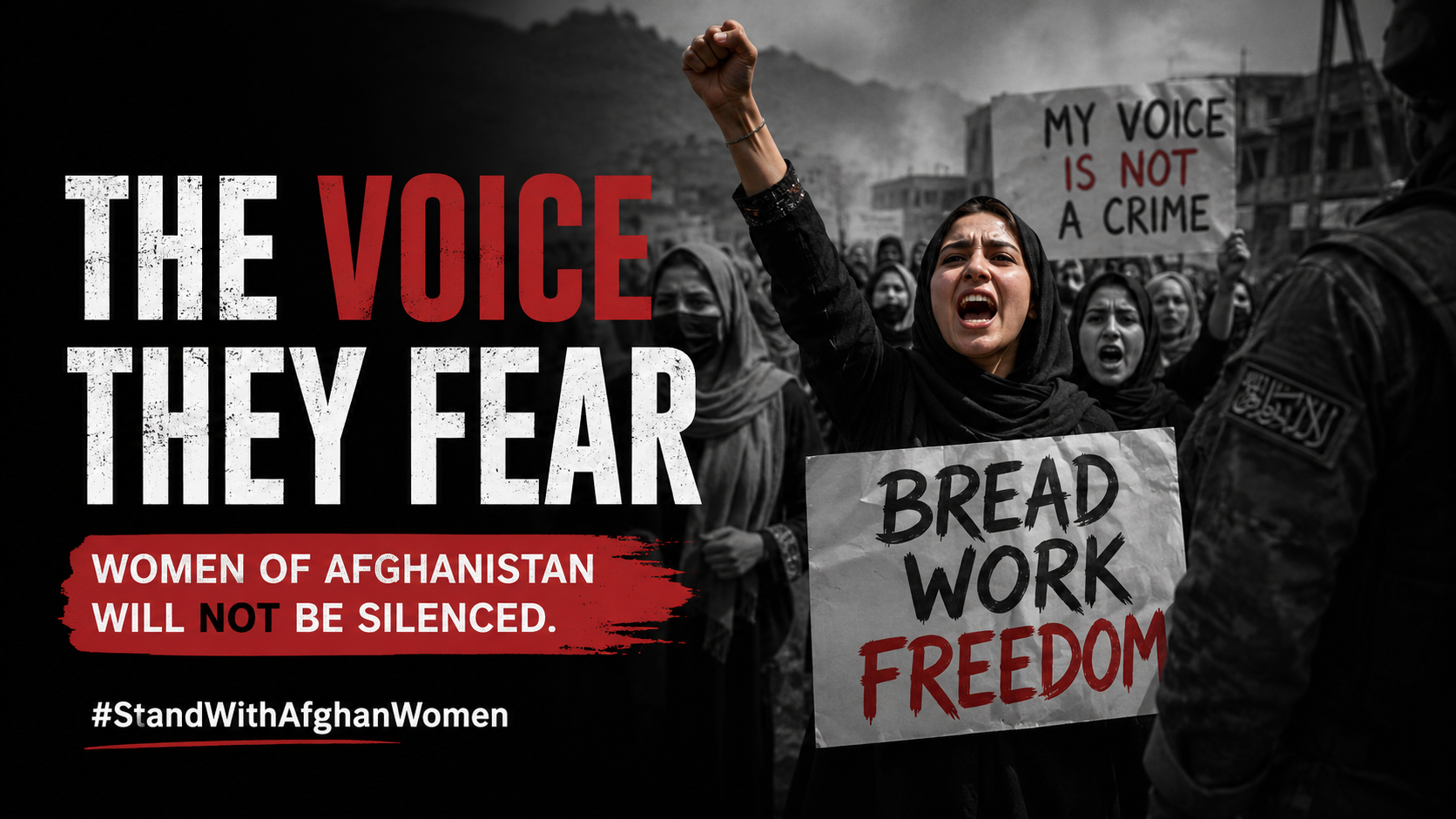
In August 2021, the Taliban took over Afghanistan, and life for women changed completely overnight. Before this, many women had big dreams of leading their country, but suddenly, they were told they could no longer participate in public life. This total exclusion of women is often called "gender apartheid"
The Wall of Silence
The restrictions began almost immediately. Schools for girls beyond the sixth grade were shuttered, and universities eventually followed suit, barring women from higher education. But the control went deeper than just classrooms. The Taliban's Ministry for the Propagation of Virtue and Prevention of Vice—often called the "morality police"—issued edicts that act like a tightening noose.

Women are now required to be accompanied by a mahram, a male relative, whenever they leave their homes. They must cover themselves from head to toe, with many being forced into the burqa, a full-body covering that conceals everything but a small mesh screen for the eyes. In Herat, this rule became so extreme that women are reportedly denied entry to hospitals and healthcare facilities if they are not wearing a burqa, leading to a 28% drop in women seeking urgent care. Most recently, the rules reached a surreal peak when the regime ruled that adult women should not even let their voices be heard by other adult women, effectively criminalizing the sound of their existence.
The Herat Crackdown: June 2026
The tension of these years boiled over in early June 2026 in the city of Herat. On June 5, the morality police issued a stern warning during Friday prayers: follow the dress code or face the consequences. Within days, at least 30 women were snatched from the streets and detained for "improper hijab".
This sparked a rare and courageous mass street protest in a predominantly Hazara neighborhood. Chanting for "Bread, Work, and Freedom," protesters faced a terrifying response. Taliban security forces didn't just use batons; they fired live ammunition into the crowd. A witness described seeing a person shot in the back as they tried to flee. Tragically, an 11-year-old boy was shot and killed during the chaos, and many others were injured.

In the aftermath, the Taliban’s governor in Herat, Noor Ahmad Islamjar, attempted to dismiss the outcry. He claimed the detained women suffered from "psychological problems" and "religious issues," further alleging that videos of the violence were "fabricated using artificial intelligence".
Resistance Behind Closed Doors
As street protests become increasingly deadly, the resistance hasn't ended; it has simply moved. Across Afghanistan, women are organizing through encrypted apps like WhatsApp and Telegram. They hold "indoor protests" in their living rooms, holding up signs and filming statements to share with the world.
Groups like the Purple Saturdays Movement have moved their operations entirely indoors after dozens of their members were arrested and tortured. To protect their identities from a regime that uses facial recognition and checkpoints to find dissenters, women often cover their faces with masks or posters during these videos. Some, however, choose to show their faces, believing that silence is the Taliban’s biggest weapon.
Education has also become an act of defiance. Underground schools operate in secret homes, where teachers risk their lives to ensure the next generation of girls can still read and write. Others have dedicated themselves to documenting every decree and every abuse, creating a digital record they hope will one day be used in international courts to hold the regime accountable.
The Price of Defiance
The cost of this resistance is staggering. Those caught protesting or violating the mahram rules are often taken to detention centers where they face horrendous conditions. Reports from survivors and former prison staff describe cells so overcrowded there is no room to lie down, with no heat in the winter and a lack of basic hygiene.
More horrifying are the accounts of torture. Detainees have reported being beaten with cables, chains, and water hoses, or subjected to electric shocks. Some women have even been forced into marriages with Taliban members as a condition for their release. The stigma of detention is so high in Afghan society that a woman’s life is often permanently altered even after she is set free.
A Plea to the World
Today, more than 22 million people in Afghanistan face food insecurity, a crisis that hits women and girls the hardest as they are the last to be allowed to work or receive aid. Many feel that the world has turned its back on them.
"For me, protesting is not just a reaction but a deep affirmation that I have agency and the will to survive," says one woman, using the pseudonym "Sara" to protect herself. Her message, and the message of countless others fighting from the shadows, is simple: "Stand with us". They are not just fighting for a dress code; they are fighting for the right to be recognized as human beings in a society that is trying to make them invisible.

The "truth" of Afghanistan today is not found in the official denials of the regime, but in the whispered lessons of underground schools and the defiant songs sung behind locked doors. It is a story of fatal resistance, where the simple act of a woman’s voice being heard is a revolutionary act.
Author Views:
I believe that no doubt Islam is a religion that prioritizes morality over almost every aspect of an individual's social life. However, oppressing women in the name of morality, by opting for such mandates, is not even practically possible. Islam is really clear when it comes to the Hijab, and mandates it. Meanwhile, it also provides flexibility in exceptional circumstances. For instance, during medical treatment, health emergencies, insanity, infancy, etc.
I believe extreme application of anything will ultimately lead to rebellion. I am not saying this, but history proves this fact. All the time the state tries to oppress by implementing extreme policies, it possibly leads to mass agitation. and in several circumstances, even the condition of civil war.
I personally admire the success of the Taliban government in maintaining law and order conditions, after the draconian two decades of USA rule and insurgency in the state of Afghanistan. However, if Afganistan goverment really wants to establish stability in reality, they have to balance their principles with those of the citizens' needs and situations.
FOR DETAILED UNDERSTANDING, PLS WATCH:
Start the Conversation
Share your perspective on this article