Who Extends the Arbitration Deadline? A Case Comment on Jagdeep Chowgule v. Sheela Chowgule
Listen to Article
Prabhat VoiceListen to natural Indian English narration
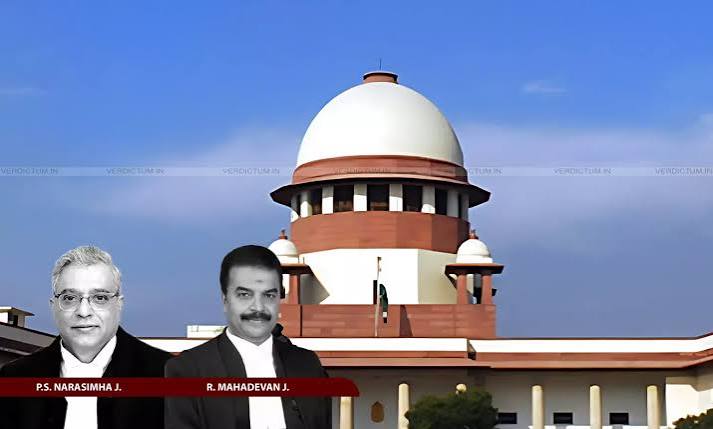
In the Jagdeep Chowgule case, the Supreme Court ruled that local civil or commercial courts must handle all requests to extend an arbitrator's deadline. High Courts do not keep control over the process, even if they originally appointed the arbitrator. This easily clears up legal confusion.
Introduction
Arbitration is designed to be a fast and efficient way to resolve disputes outside the traditional courtroom. To maintain this speed, Indian arbitration law imposes strict deadlines. The law mandates that an arbitral tribunal must deliver its final decision within twelve months. If the arbitrators need more time, a specific court must grant an extension. However, a major legal puzzle emerged across the country regarding exactly which court has the authority to grant this time extension. The confusion peaked when a higher court, like a High Court, initially appointed the arbitrator. This debate led to conflicting decisions across various states, causing unnecessary delays. In the landmark case of Jagdeep Chowgule versus Sheela Chowgule, the Supreme Court of India stepped in to resolve this nationwide confusion. The Supreme Court delivered a powerful ruling that prioritizes the clear written law over the perceived status or hierarchy of different courts. This comment analyzes the background, the legal interpretations, and the final decision of the Supreme Court, highlighting how it restores clarity to the Indian arbitration system.
Brief facts
The dispute in this case originated within the Chowgule family. The family members had previously signed a memorandum of family settlement to divide their assets peacefully. Unfortunately, disagreements arose, and the family members decided to invoke the arbitration clause hidden within their settlement agreement.
They initially formed an arbitral tribunal to hear their grievances. As the arbitration proceedings continued, the timeline began to run out. One of the parties approached a local Commercial Court, asking for an official extension of time so the arbitrators could finish their work.
During this exact period, the presiding arbitrator resigned from his position. To keep the process moving, the party approached the High Court to appoint a new presiding arbitrator. The High Court agreed and appointed a replacement.
Shortly after, the local Commercial Court officially granted the requested time extension. However, the opposing family member challenged this extension. They argued that because the High Court had stepped in to appoint the new arbitrator, the lower Commercial Court had lost its authority to manage the timeline. The High Court agreed, ruling that a lower court cannot oversee an arbitrator appointed by a higher court. It cancelled the extension, prompting an appeal to the Supreme Court.
Applicable laws and interpretation
This legal battle revolves around the Arbitration and Conciliation Act. The first crucial provision is the timeline rule, legally known as Section 29(A). This rule dictates that an award must be made within a specific timeframe. If the deadline passes, the arbitrator's mandate terminates unless a court officially extends it.
The second key provision defines the word "Court" for the entire law. Under Section 2, a court is strictly defined as the principal civil court of original jurisdiction in a district.
The third provision involved is Section 11, which gives High Courts the special power to appoint an arbitrator when the fighting parties cannot agree.
The core interpretation issue was whether the definition of a court changes depending on who appointed the arbitrator. One group of judges believed in a contextual interpretation. They felt that if a High Court appointed the arbitrator, allowing a lower district court to extend the timeline would create a hierarchical insult. They argued that only the appointing higher court should have the power to extend the mandate to avoid a conflict of power. The other group of judges relied on a strict textual interpretation. They argued that regardless of who appointed the arbitrator, the administrative task of extending the timeline must always fall to the principal civil court.
Decision of the Supreme Court of India
The Supreme Court delivered a clear decision, siding with the strict textual interpretation of the law. The Court firmly rejected the idea that the hierarchy of courts should alter the plain meaning of a statute.
The Supreme Court explained the exact nature of the appointment power held by High Courts. It clarified that the power to appoint an arbitrator is a special and limited jurisdiction. Once the High Court appoints the arbitrator, its job is completely finished. The High Court does not retain any lingering supervisory control over the arbitration proceedings. The Supreme Court eloquently noted that the High Court does not watch over the arbitration like a "Big Brother".
Because the High Court's role ends after the appointment, the Supreme Court ruled that any subsequent request for a time extension must be filed in the principal civil court, exactly as defined in the statute.
The Supreme Court dismissed the fears regarding a hierarchical anomaly. It stated that judicial power flows from the law, not from the status or rank of a judge. If the parliament legislated that a civil court handles extensions, then the civil court must do so. The Supreme Court stressed that altering a clear law based on judicial ego goes against the fundamental rule of law.
Conclusion
The judgment delivered by the Supreme Court is a monumental step forward for the arbitration landscape. By resolving the conflicting opinions among various state courts, the Supreme Court has removed a massive procedural roadblock that was causing immense confusion.
This decision is highly analytical in its approach to statutory interpretation. It firmly establishes that courts must not rewrite the law under the disguise of interpretation, especially when the legislative text is absolutely clear. By rejecting the argument based on court hierarchy, the Supreme Court reinforced the constitutional principle that the written law is supreme.
From a practical standpoint, this ruling ensures that High Courts will not be unnecessarily burdened with administrative tasks like granting time extensions for ongoing arbitrations. Instead, these matters will be efficiently handled by local civil and commercial courts, aligning perfectly with the legislative goal of minimal judicial intervention and speedy dispute resolution.
Ultimately, this ruling protects the integrity of the arbitration process. It assures parties that their arbitration timelines will be managed by a predictable set of rules rather than a confusing web of jurisdictional overlaps. The decision is a triumph for legal certainty, ensuring that the alternative dispute resolution mechanism remains a swift option for resolving commercial disputes.
References:
- Jagdeep Chowgule v Sheela Chowgule INSC 92 https://indiankanoon.org/
- AR Antulay v RS Nayak (1988) 2 SCC 602.
- SBP & Co v Patel Engineering Ltd (2005) 8 SCC 618.
- State of West Bengal v Associated Contractors (2015) 1 SCC 32.
- Malhotra OP, 'Opening the Pandora's Box: An Analysis of the Supreme Court's Decision in SBP & Co. v. Patel Engineering Limited' (2007) 19(2) NLSIR 69 (Reprinted in 2013 NLSIR Special Issue) <Manupatra>.
- Prabhat RV, 'The Definition of “Court” under Section 29-A, Arbitration and Conciliation Act, 1996: A Critical Analysis of Jagdeep Chowgule v. Sheela Chowgule' (SCC Times, 7 March 2026) https://www.scconline.com/blog/post/2026/03/07/section-29a-court-definition-jagdeep-chowgule-analysis/.
- Rai S, Jamra A, and Meena A, 'The Jurisdictional Conundrum Of Section 29A: Analysing The Supreme Court's Resolution And The Principle Of Minimal Intervention' (2026) 8(1) Indian Journal of Law and Legal Research https://www.ijllr.com/.
- Ritu, 'Know Thy Judge | Supreme Court of India: Justice R. Mahadevan's Inspirational Journey and Notable Judgments' (SCC Times, 10 June 2026) https://www.scconline.com/blog/post/2026/06/10/know-thy-supreme-court-judge-justice-r-mahadevan/.
- Supreme Court Observer, 'View Mind Map - Jagdeep Chowgule v. Sheela Chowgule' (Supreme Court Observer, 2026) <www.scobserver.in>.
- Vora A and Kumar KS, '2026 Supreme Court mid-year review: Arbitration' (Supreme Court Observer, 25 June 2026) https://www.scobserver.in/category/analysis/
#ArbitrationLaw #SupremeCourtOfIndia #Section29A #JurisdictionalClarity #ArbitrationAndConciliationAct #JagdeepChowgule #IndianLaw #LegalAnalysis #DisputeResolution #JusticeRMahadevan
Written by
Team Fairlex
Contributor and legal researcher at FairLex, analyzing contemporary Indian jurisprudence, landmark judicial decisions, and legislative policy.
Continue Reading
Related Stories

Start the Conversation
Share your perspective on this article