Supreme Court Cancels Bail in Alleged Espionage Case
Listen to Article
Prabhat VoiceListen to natural Indian English narration
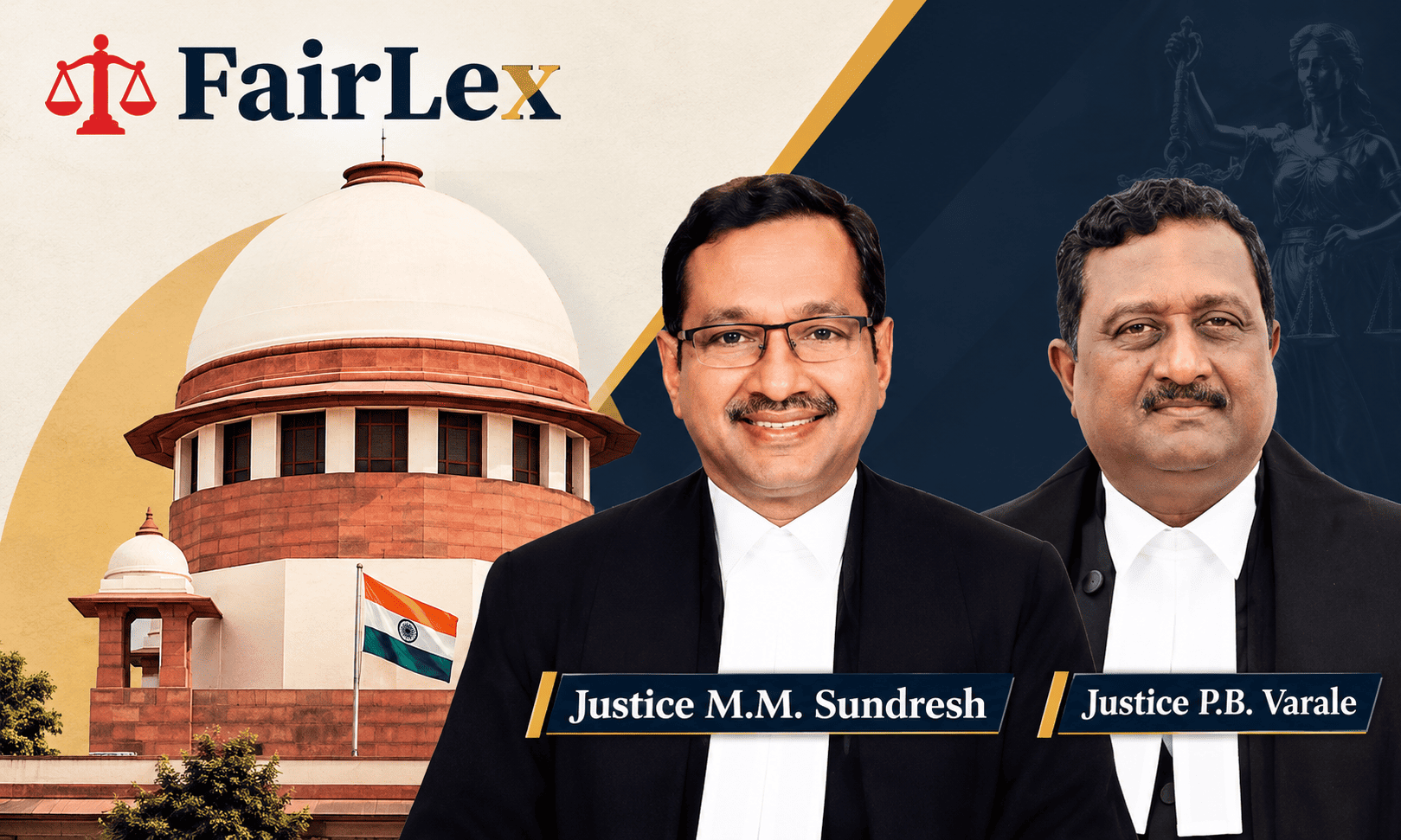
The Supreme Court has cancelled the regular bail granted to Jhabra Ram in an alleged espionage case, holding that a procedural objection regarding the communication of grounds of arrest does not automatically entitle an accused to bail. The Court emphasised that the alleged defect must be examined in light of the circumstances and whether it caused prejudice to the accused.
A Bench of Justices M.M. Sundresh and Prasanna B. Varale set aside the Rajasthan High Court's order, finding that the arrest safeguards had been substantially complied with in the present case.
Background Of The Case
Jhabra Ram was accused of sharing sensitive military information, including photographs, videos and details of troop movements in Pokhran and Jaisalmer, with handlers linked to a Pakistani intelligence agency in exchange for money. An FIR was registered on January 30, 2026, under Sections 3 and 9 of the Official Secrets Act, 1923, and Sections 152 and 238(b) of the Bharatiya Nyaya Sanhita, 2023.
The Rajasthan High Court granted him regular bail on May 18, 2026, holding that the grounds of arrest had not been furnished in writing before or at the time of remand relyingMihir Rajesh Shah v. State of Maharashtra (2026). The State challenged this order before the Supreme Court.
Constitutional Safeguards Under Article 22(1)
Article 22(1) of the Constitution requires an arrested person to be informed of the grounds of arrest as soon as possible and guarantees the right to consult and be defended by a lawyer of their choice. Section 47 of the BNSS provides a corresponding statutory safeguard. These protections enable an arrested person to understand the reasons for their arrest, seek bail and prepare a defence.
Judicial Precedents and the Prejudice Test
The Rajasthan High Court relied on Mihir Rajesh Shah v. State of Maharashtra (2026), which dealt with the requirement of communicating grounds of arrest in writing. The Supreme Court did not reject this principle but examined whether the safeguard had been effectively complied with in the present case.
It also relied on State of Karnataka v. Sri Darshan (2026), which applied a prejudice-oriented test. This means that a court must examine whether a procedural defect actually disadvantaged the accused or affected their ability to defend themselves. Applying this test, the Supreme Court noted that the arrest memo detailed the allegations, was read over to Jhabra Ram and bore his signature. His brother was also informed of the arrest, and legal counsel represented him during remand proceedings.
Reasons for Cancelling Bail
The Court found no demonstrable prejudice to the accused and held that the High Court had treated the alleged procedural irregularity as an automatic ground for bail. It observed that courts must also consider the gravity of the allegations, the potential punishment, the risk of the accused absconding or tampering with evidence, and the implications for public interest and national security.
The Court observed:
“A hyper-technical objection regarding the form or mode of communicating grounds of arrest cannot be treated as a self-executing, blanket key to unlock regular bail, bypassing the core parameters governing bail jurisprudence.”
Regular bail refers to the release of an accused from custody while criminal proceedings are pending. The Court clarified that an alleged procedural defect, without demonstrable prejudice, cannot by itself justify such release.
Supreme Court's Decision
The Supreme Court set aside the High Court's order and cancelled the bail granted to JhabraRam. It directed him to surrender before the trial court or investigating agency within two weeks, failing which the State could take him into custody.
The Court clarified that its observations were limited to the bail proceedings and would not affect the merits of the ongoing trial. The allegations against the accused remain to be determined through the legal process.
Read Full Judgement here : https://api.sci.gov.in/supremecourt/2026/42251/42251_2026_4_1501_75646_Judgement_28-Oct-2026.pdf
Continue Reading
Related Stories

Start the Conversation
Share your perspective on this article