Judicial Discipline and Article 141: Supreme Court Restores DVC Tariff Order
Listen to Article
Prabhat VoiceListen to natural Indian English narration
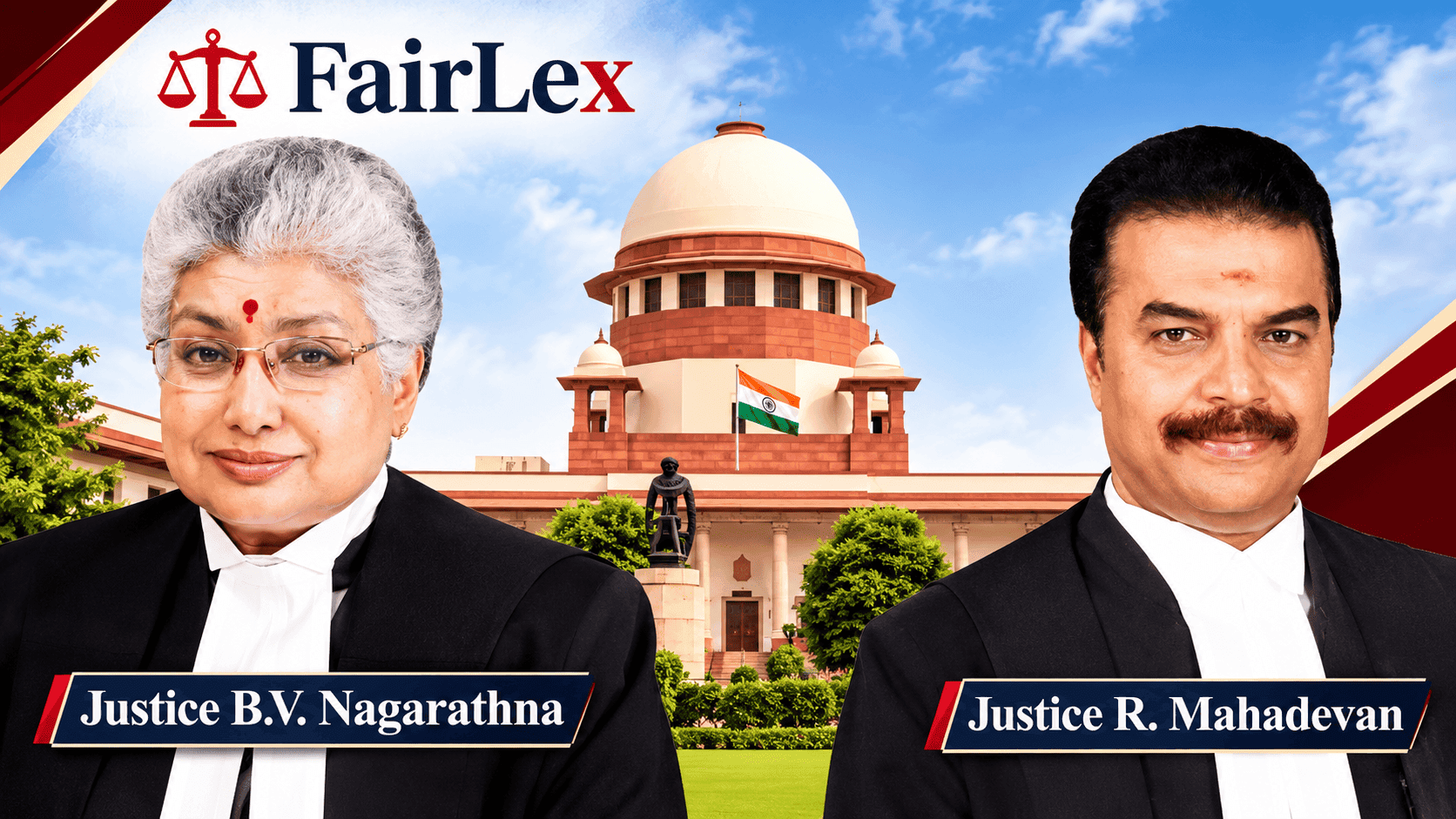
On 30 October 2026, a Bench of Justices J.B. Pardiwala and K. Vinod Chandran of the Hon'ble Supreme Court, in the case of Damodar Valley Corporation v. Maithan Alloys Limited & Ors., set aside a review order of the Appellate Tribunal for Electricity (APTEL). The Tribunal had reopened, after five years, a tariff order that rested squarely on binding Supreme Court precedent.
The dispute concerned whether Damodar Valley Corporation’s Sinking Fund contribution can be recovered through tariff alongside depreciation.
Factual Background of the Case
The Central Electricity Regulatory Commission (CERC) fixed DVC's tariff for 2009-2014 under the Electricity Act, 2003, the Damodar Valley Corporation (DVC) Act, 1948 and the 2009 Tariff Regulations. It treated the Sinking Fund, which redeems DVC's bonds, as recoverable expenditure. Bhaskar Shrachi Alloys v. DVC 2018 INSC 629 had upheld this for an earlier period.
On 17 May 2019, APTEL affirmed CERC's order relying on that decision. Nobody appealed. Maithan Alloys alone sought review, which APTEL allowed in 2024, holding that depreciation plus the Sinking Fund meant a double allowance. DVC appealed, and SAIL intervened in support of the review order.
Legal Issues Raised
There were two significant legal issues raised before the Hon’ble Supreme Court.
First, whether Section 40 of the DVC Act, read with Regulation 43 of the 2009 Regulations, permits both depreciation and Sinking Fund contributions to be recovered through tariff.
Second, whether APTEL could review its 2019 order on a "double benefit" ground allegedly not raised earlier, in light of Article 141.
Rationale & Judgement of the Court
The Court agreed with Bhaskar Shrachi that the fourth proviso to Section 14 of the 2003 Electricity Act preserves DVC Act provisions not inconsistent with it. Section 40 is consistent with Section 61, which governs tariff principles. Regulation 43(2)(iii) and (iv) expressly allow depreciation and treat Section 40 funds as recoverable expenditure.
On review, the Court held that the double-allowance argument had been specifically considered in the original order. Applying State of West Bengal v. Kamal Sengupta 2008 INSC 759, it held that review cannot correct an erroneous decision or operate as an appeal. It termed the review "clearly illegal" and imposed costs of Rs. 2 lakh on Maithan Alloys and Rs. 1.5 lakh on Steel Authority of India Limited (SAIL)..
Legal Analysis
The review holding is unassailable. Even if APTEL's concern had merit, it was a ground for appeal, not review. Notably, the precedent here predated the original order, so this was not even a case of reviewing on the basis of a later judgment.
The more interesting question is whether the Court's answer on double benefit is fully satisfying. It candidly accepts that Section 40 departs from ordinary accounting, since a reserve fund is normally appropriated from net profit rather than treated as a first charge.
Its answer is statutory, not economic: Parliament's saving of the DVC Act, and the regulation giving effect to it, settle the matter. That is legally sound, but it leaves the consumers' fairness argument largely unanswered.
The Court also reasoned that Bhaskar Shrachi decided the issue even though the words "double allowance" never appeared in it. This is a form of constructive consideration that strengthens finality, though it may sit uneasily with litigants who say a specific argument was never heard.
Finally, the Court's language, such as the Tribunal having "gone haywire", reflects genuine judicial frustration. The costs on SAIL, a public sector undertaking, signal that institutional litigants will answer for supporting orders in breach of discipline.
Conclusion and Legal Significance
The judgment is a firm reminder that tribunals cannot use review jurisdiction to revisit settled law, and that Article 141 binds them without exception. It also gives DVC regulatory certainty on Sinking Fund recovery for the 2009-2014 period.
Its wider value lies in reinforcing the limits of review under Kamal Sengupta, and in the Court's observation that finality is the expedient need in litigation. Whether the underlying double-recovery critique deserves fresh scrutiny in a properly constituted appeal remains an open policy question.
Written by
Mohammad Yasir Bhat
The author is a second-year law student at the School of Law, University of Kashmir, with a keen interest in Constitutional Law, Human Rights, History & Politics.
Continue Reading
Related Stories


Start the Conversation
Share your perspective on this article