The Constitution Cannot Make Conscience Sing
Listen to Article
Prabhat VoiceListen to natural Indian English narration
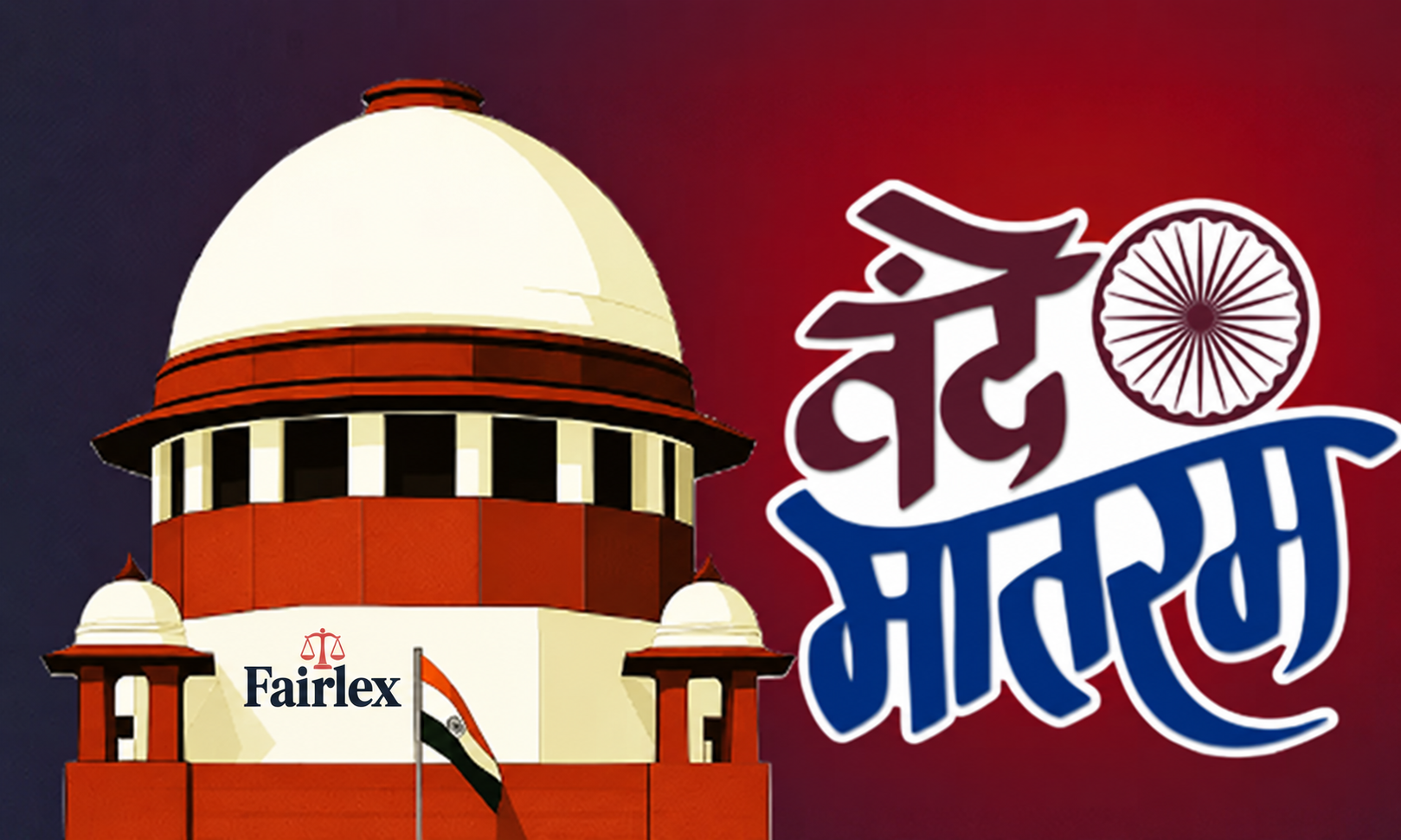
The Supreme Court’s recent proceedings on Vande Mataram have reopened a question: how far can the State go in prescribing patriotic expression when it conflicts with religious conscience?
A Buddhist activist, B. D. Borkar, has challenged the Union Government’s January 28 and July 9, 2026 directions prescribing a six-stanza version of Vande Mataram for specified occasions. He argues that the additional stanzas invoke Hindu deities and that compulsory participation burdens freedom of conscience, religion and expression. The Supreme Court, while hearing a similar challenge by musician T. M. Krishna, recently indicated that conscientious non-singing should not attract criminal consequences, referring to Bijoe Emmanuel v. State of Kerala.
The central constitutional question, therefore, is not whether Vande Mataram has historical importance. It unquestionably does. The question is whether national sentiment can become a ground for compelling an individual act that conflicts with conscience.
Article 25 begins with unusually powerful words: “freedom of conscience.” It protects not merely the right to profess a religion but also the individual’s freedom to decide what he or she can sincerely believe, reject or participate in. This protection is subject to public order, morality and health and the other Fundamental Rights. The State therefore cannot assume that every citizen must express patriotism identically.
This principle was made clear in Bijoe Emmanuel. Three schoolchildren belonging to the Jehovah’s Witnesses faith stood respectfully during the National Anthem but did not sing it because their religious beliefs prevented them from singing praises to anyone other than God. The Supreme Court protected them under Articles 19(1)(a) and 25(1). The Court held that respectful standing could constitute adequate respect.
The significance of Bijoe Emmanuel is not that every objection to a national song automatically becomes constitutionally valid. Its significance is that the State must distinguish between disrespect and conscientious non-participation. A person who remains silent is not necessarily obstructing the national ceremony.
The present controversy becomes more complicated because the six-stanza version is alleged to contain invocations to Durga, Lakshmi and Saraswati. Whether those references amount to religious worship under Article 25 would require adjudication. Courts may examine the text, context and nature of the compelled act. But the constitutional concern is evident: the State should be cautious before converting a culturally significant composition containing religious imagery into a compulsory form of public expression.
The argument under Article 26 requires precision. Article 26 protects religious denominations to establish and maintain institutions, manage their own affairs in matters of religion, own property and administer it according to law. It is not simply an individual “right to choose” every religious practice. The stronger individual-right argument here arises under Article 25(1), particularly freedom of conscience. Article 26 becomes relevant where a denomination’s autonomy or affairs in matters of religion are directly affected.
The constitutional philosophy behind these provisions is visible in the Preamble. India promises liberty of thought, expression, belief, faith and worship, equality of status and opportunity, and fraternity assuring the dignity of the individual. These words show that national unity is not expected to erase individual conscience.
The Constituent Assembly’s treatment of national symbols is equally significant. On January 24, 1950, Dr. Rajendra Prasad announced that Jana Gana Mana would be the National Anthem and that Vande Mataram, because of its historic role in the freedom struggle, would be honoured equally with it. The statement did not prescribe a particular six-stanza rendition. The dispute therefore raises an institutional question: can an executive order determine the content and compulsory manner of a national song?
The history of Vande Mataram also matters. The 1937 Congress Working Committee decision recommended that only the first two stanzas be sung at national gatherings, following concerns surrounding the later portions. The petitioner relies on this history to argue that the two-stanza version acquired a settled public character. Whether that history has legal force is for the Court to decide. Historical practice, by itself, cannot create a constitutional prohibition; equally, executive practice cannot automatically create unlimited executive power.
The Supreme Court’s jurisprudence on secularism provides another lens. In S.R. Bommai v. Union of India, the Court described secularism as a basic feature of the Constitution and emphasised that the State cannot identify itself with or prefer a particular religion. The judgment connected secularism with equal treatment. This does not mean every public reference to religion is unconstitutional; the State may regulate secular aspects of religious activity.
That distinction is crucial. A national song can be historically associated with the freedom movement and still raise constitutional questions about compelled participation. Patriotism is a constitutional value only when expressed within constitutional limits. The State can prescribe ceremonies; it cannot assume that constitutional citizenship requires uniformity of belief under constitutional scrutiny.
There is also a democratic paradox here. Fraternity cannot be produced by compelling identical expressions from citizens with different consciences. The constitutional promise is not that every Indian must feel or worship alike. It is that people with different beliefs can participate equally in the national community.
The Supreme Court therefore faces a carefully defined question. It need not decide whether Vande Mataram is patriotic or whether its historical importance should be diminished. Nor does it necessarily need to decide which version represents the nation’s sentiment. The precise issue is whether the State can compel an individual to sing or participate in a composition that, in that individual’s sincere religious conscience, amounts to an impermissible religious act.
If Bijoe Emmanuel remains good law, the answer may turn not on the popularity of the song but on the constitutional distinction between respect and compulsion. A citizen may stand with the nation without being required to surrender conscience to the State.
That is ultimately the strength of constitutional patriotism: the Republic does not ask its citizens to abandon their differences before entering the national community. It protects those differences while asking everyone to remain equal citizens under one Constitution.
The views are personal
Written by
Aziz Umar
Law student at Jamia Millia Islamia, legal researcher, writer and debater exploring constitutionalism, human rights, public law and social justice.
Continue Reading
Related Stories

Start the Conversation
Share your perspective on this article