Did the Opposition Really Impeach Gyanesh Kumar? Here's What the Law Says
Listen to Article
Prabhat VoiceListen to natural Indian English narration
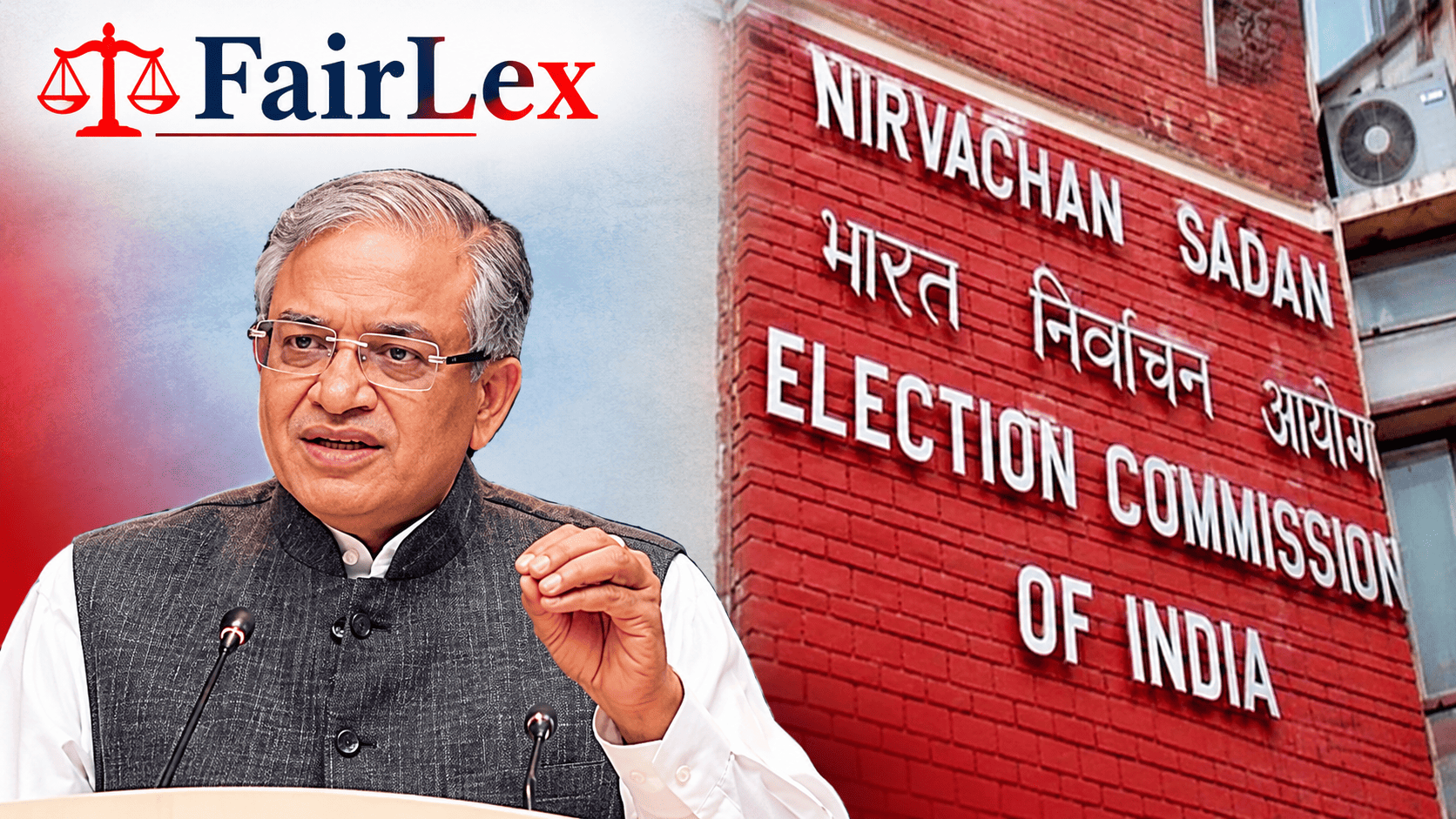
The INDIA bloc's symbolic public impeachment of the Chief Election Commissioner has intensified the debate over electoral integrity. However, India's constitutional framework prescribes a specific procedure for removing the head of the Election Commission.
Introduction
On 31 October 2026, the INDIA bloc held a symbolic "public impeachment" of the Chief Election Commissioner (CEC) Gyanesh Kumar at the Congress President Mallikarjun Kharge's residence, on a set recreating the Lok Sabha, with former Speaker Meira Kumar presiding. The resolution was adopted. Legally, It removed nobody.
Why A Mock Sitting?
The exercise followed a failed formal route. In April, the Lok Sabha Speaker and Rajya Sabha Chairman refused to admit removal notices signed by 193 MPs, citing no reasons. Shashi Tharoor defended the mock sitting on that basis.
The BJP, through spokesperson Sudhanshu Trivedi, dismissed the exercise as a stage-managed Parliament of the Leader of Opposition's own choosing.
Mallikarjun Kharge listed six charges, including conspiring to influence elections, deleting 13.2 crore voters, rewriting Form 6 without parliamentary oversight and seizing electoral rolls through ECINET. These are political allegations, not judicial findings.
The Constitutional Bar
Article 324(5) bars removal of the CEC except in like manner and on the like grounds as a Supreme Court judge. Section 11(2) of the CEC Act, 2023 repeats this. Other Election Commissioners, under Section 11(3), go only on the CEC's recommendation.
Removal therefore follows Article 124(4) and the Judges (Inquiry) Act, 1968, which PRS Legislative Research outlines in these steps:
First, a notice signed by at least 100 Lok Sabha or 50 Rajya Sabha members goes to the presiding officer, who may admit or refuse it.
Secondly, if admitted, a three-member committee of a Supreme Court judge, a High Court Chief Justice and a jurist investigates, and the office-holder may defend himself.
Thirdly, if misbehaviour or incapacity is found, each House must adopt the motion by a majority of its total membership and two-thirds of members present and voting & finally the President then orders removal.
The design is deliberate. The Law Commission has noted that Article 324(5) is meant to free the Election Commission from external, political interference. A removal procedure that a temporary majority could bypass would defeat that purpose. The shield protects the institution, yet it does not bar scrutiny.
Analysis
The Constitution never uses the word "impeachment". It is shorthand for the Article 124 process, which is why a "public Impeachment" has no legal footing.
The mock sitting was not an address under Article 124(4). It was not a House of Parliament, followed no inquiry and recorded no special majority. Its resolution carries political weight but no legal consequence, and Kumar's tenure is unaffected.
Article 124(4) permits removal only for proved misbehaviour or incapacity. Several charges, such as centralising rolls on ECINET or altering Form 6, rest on administrative decisions. Whether they amount to misbehaviour is precisely what an inquiry committee, not a public resolution, must decide.
The event also called for Kumar to be tried for treason. Section 16 of the 2023 Act bars courts from entertaining civil or criminal proceedings against a current or former CEC for acts in the discharge of official duty.
The Supreme Court has issued notice on a petition challenging that protection, so its scope is not settled. Parliament's removal power, by contrast, rests on the Constitution itself.
The sharper issue is the threshold. Section 3 lets the presiding officer admit or refuse a notice after considering available material, and does not, in terms, require reasons. The April refusals cited none, though the Rajya Sabha notice alone carried 63 signatures against a minimum of 50.
The Supreme Court's January 2026 ruling in X v. Speaker of the House of People shows how much turns on admission. It upheld the Lok Sabha Speaker's inquiry committee on Justice Yashwant Varma although the Rajya Sabha had refused the same motion. One admission sufficed.
By contrast, in the CEC's case both presiding officers refused, leaving no admitted notice and no inquiry. Whether such discretion should be exercised without recorded reasons, for a constitutional office, is a fair question for Parliament to answer.
That inquiry is where allegations would actually be tested. The 13.2 crore deletion claim, or reports that Election Commissioners Sukhbir Singh Sandhu and Vivek Joshi objected to decisions taken without their knowledge, remain untested until someone examines them.
Conclusion
Political signals point both ways. Shashi Tharoor said the proceedings could move to Parliament if notices are admitted, while Home Minister Amit Shah has said the BJP is ready to convene a special session to debate vote-theft allegations. A debate, however, is not a removal motion.
The CEC is deliberately hard to remove, but not unaccountable. Whether that accountability is real depends on the first gate: a presiding officer's decision to admit a notice. Until one does, the only lawful route to removal remains closed.
Written by
Mohammad Yasir Bhat
The author is a second-year law student at the School of Law, University of Kashmir, with a keen interest in Constitutional Law, Human Rights, History & Politics.
Continue Reading
Related Stories

Start the Conversation
Share your perspective on this article